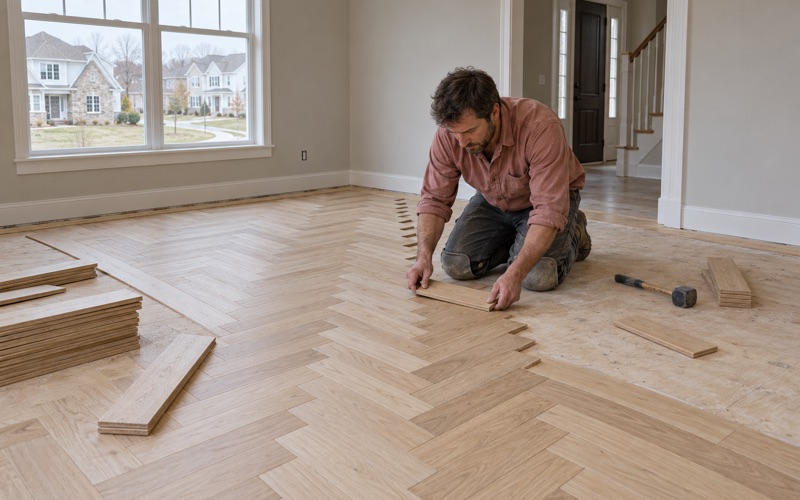
Severn Wood Flooring has handled wood-flooring in Elkridge for more than 20 years, and the jobs that take the most care here are the ones where the floor is older than anyone living in the house. Before a sander touches it, we want to know what the boards are, what has been put on them over the decades and what someone patched along the way.
That reading shapes the whole quote. A floor that has been sanded several times may not have much wood left above the tongue, a coat of wax under a newer finish can stop fresh polyurethane from bonding, and a patch of mismatched boards near a wall can tell you a room was once laid out differently. We would rather find those things on the first visit than halfway through the second day.
The same care applies whether the house went up more than a century ago or in the last decade. Newer Elkridge homes get the same written, itemized estimate, the same dust containment and the same stain samples laid on the actual floor. The older houses simply have more history to read first.
Lawyers Hill above the Patapsco, built family by family
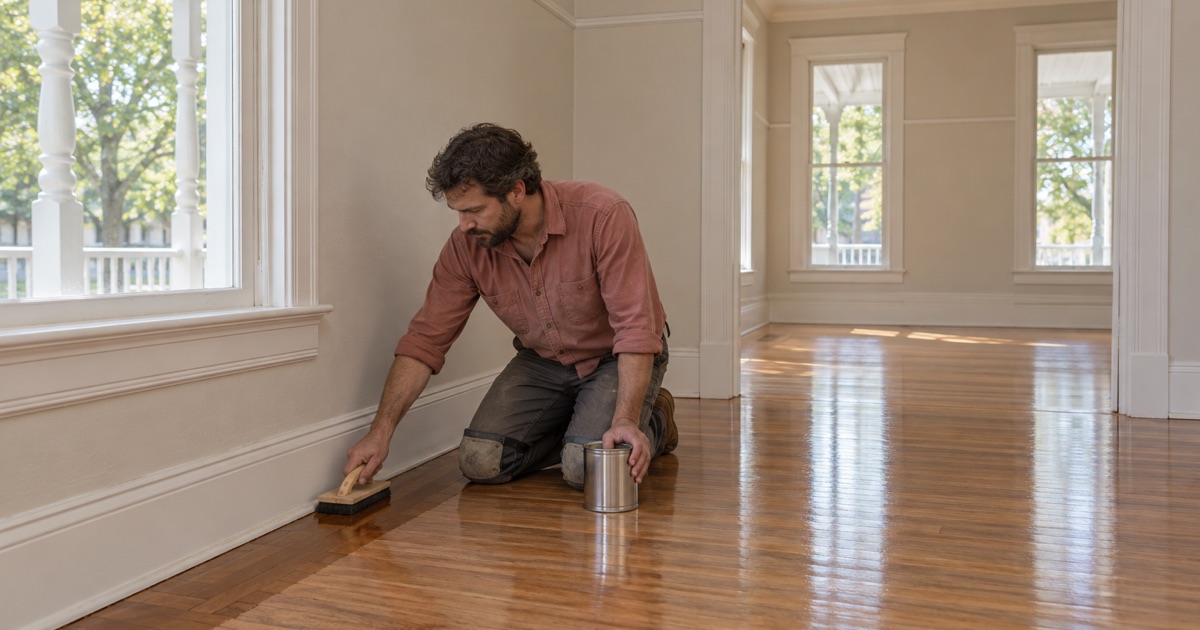
Some of the oldest floors we see in Elkridge sit on Lawyers Hill, on the Falls Hills that rise 300 feet above the Patapsco River. Howard County’s Lawyers Hill Historic District Design Guidelines, adopted in 1995, describe a place that was never laid out from a single plan. In their words, Lawyers Hill “was not planned by a developer. The community grew incrementally as families subdivided their land.”
Why an unplanned neighborhood means unmatched floors
A subdivision built by one developer usually shares a floor: the same red oak strip flooring, the same subfloor, the same nailing pattern, house after house. Lawyers Hill did not grow that way; each house went up when a family decided to build, with the materials and methods of its own decade. For a floor crew, that means no assumption carries from one driveway to the next. Board width, species, how the boards were fastened and what lies under them all have to be checked house by house.
A district recognized twice
The Lawyers Hill Historic District was listed on the National Register on September 23, 1993, and Howard County designated its local historic district on April 25, 1994. The local district takes in only properties east of I-95, which split the community in the early 1960s. The 1995 guidelines are written about exterior alterations, and they state plainly that “Interior alterations do not require a Certificate of Approval.” The guidelines document is dated 1995, so if a project also touches the outside of the house, such as a porch or an entry, we suggest checking with Howard County’s Historic Preservation Commission before that part of the work begins.
What the history changes on the job
The history does not change how we sand. It changes how long we look before we sand. On a Lawyers Hill floor we expect previous repairs, older finishes and boards that have already given up some thickness, and we plan the visit around finding them.
That first visit takes longer than it would on a newer house. We lift a register cover where we can, look at the underside of the boards from the basement if the joists are exposed, and walk each room for soft spots before writing anything down.
Looking for wood-flooring closer to Odenton? See Odenton Wood-Flooring.
Twenty-two homes from 1750 to 1937, and the Victorians on Lawyers Hill Road
According to the 1995 guidelines, “The 22 historic homes that survive in the local Historic District include a broad array of architectural styles ranging from 1750 Dutch Colonial to 1937 Georgian Revival.” That is almost two centuries of building in one small district, and a floor contractor has to read each house as its own case.
The Victorian cluster
The guidelines single out the Victorian domestic architecture built roughly between 1841 and 1900 along Lawyers Hill Road and Old Lawyers Hill Road, calling the collection “unparalleled in the County.” These are country houses, many of them added to or reworked over the years. In a house like that, a single room can hold boards from the first build alongside boards from a later addition, a kitchen renovation or a heating upgrade.
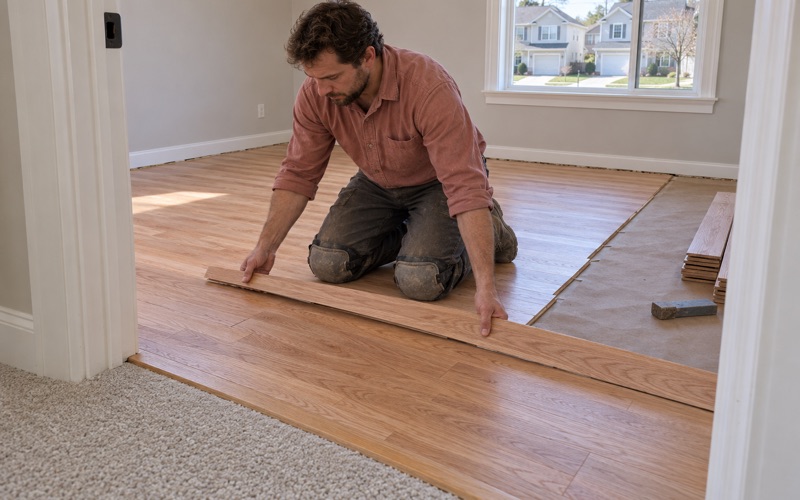
Additions are where floors most often disagree. A board run that changes direction at a doorway, a strip that stops short of a wall, or a different species meeting the older boards at a threshold usually marks where one era of the house meets another. We note each of those transitions, because each may need its own repair and its own finish plan.
Signs of a floor’s age we look for
Rather than guess at what is underneath, we look for evidence. Face nails along the board edges, filled holes where floor registers once sat, a seam where an old wall came out, and wax residue in the corners all tell part of the story. So do traffic lanes worn into the finish, rug shadow where furniture stood for decades, and nail pops or squeaky floorboards that show movement at the joist. Where boards have cupped or crowned, we take moisture meter readings before deciding whether the cause is still active.
Pests and past damage
Old wood can carry old problems. Small exit holes and fine powdery frass can point to powderpost beetle activity, and soft or hollow boards near an exterior wall can point to termite damage. When we see either, we stop, tell you and recommend the right specialist before any repair is priced, because sanding over an active problem only hides it.
What an old country-house floor needs assessed before work starts
A floor in a house built anywhere from 1750 to 1937 needs a short list of answers before anyone talks about stain colors. We work through them in the same order on every visit.
How much wood is left
Every sanding removes some of the board. On a floor that has been refinished several times, we look at the tongue and groove from a register opening or an edge where the profile shows, and we judge whether a full sanding is safe. If it is not, a screen and recoat or a hardwax oil maintenance coat may be the better choice, and we will say so even though it is the smaller job.
What finish is on it now
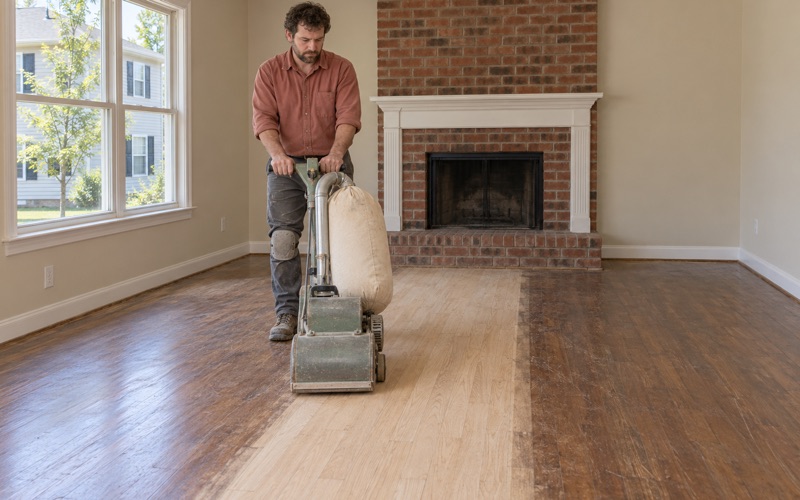
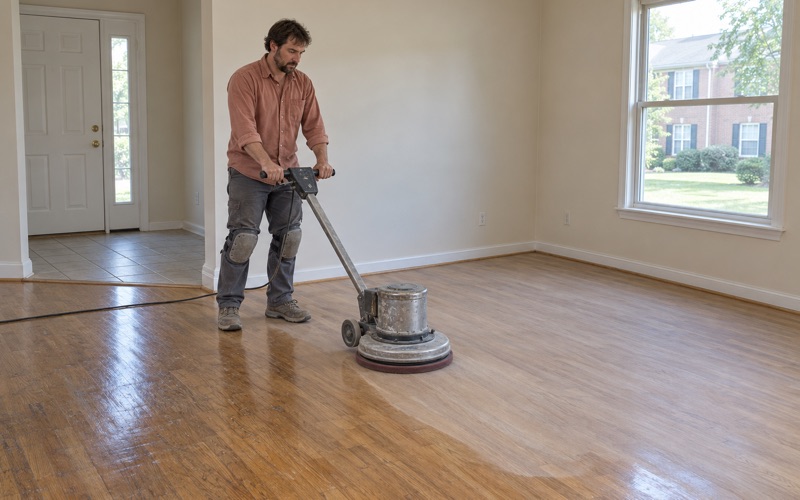
Older floors often carry layers: shellac or varnish from decades ago, wax applied over it, and sometimes a newer polyurethane that is now peeling where it never bonded. We test a small area to see what we are dealing with. That answer decides whether the drum sander and a full grit sequence are needed, and which finishes will bond afterward.
Movement and the subfloor
Cupping, crowning, buckling and wide board gapping each point to a different cause. Winter gaps that close again in summer are ordinary seasonal movement in solid hardwood, while gaps that stay open all year, or boards lifting off the subfloor, suggest a moisture source or a fastening problem we should find first. Where a floor squeaks or bounces underfoot, we look at the joist and subfloor below before any refinishing is quoted.
Lead paint and old tile
Every house in this range was built long before 1978, so it falls under lead-safe renovation rules. We check the build year and any painted surfaces near the floor, such as baseboards, thresholds and stair risers, before sanding, and we set up dust containment with doors and returns sealed and a HEPA vacuum on hand. If a later owner laid resilient floor tile over the boards, we identify it and any black mastic before anything is sanded, and leave that removal to the right trade.
Earlier repairs
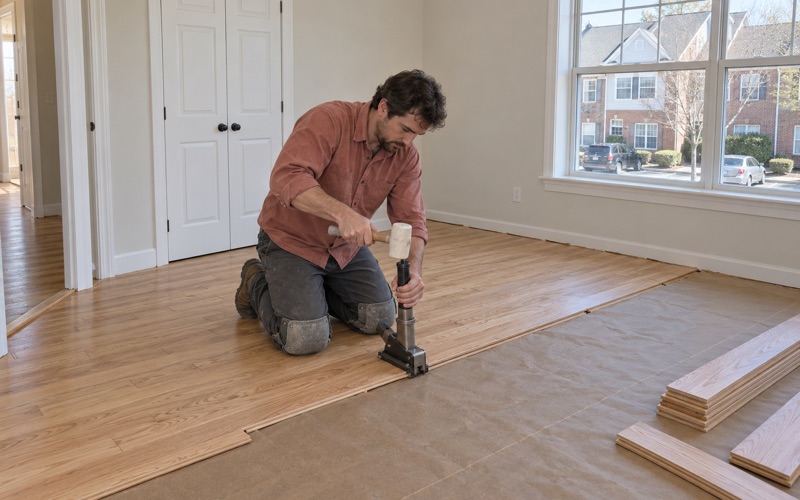
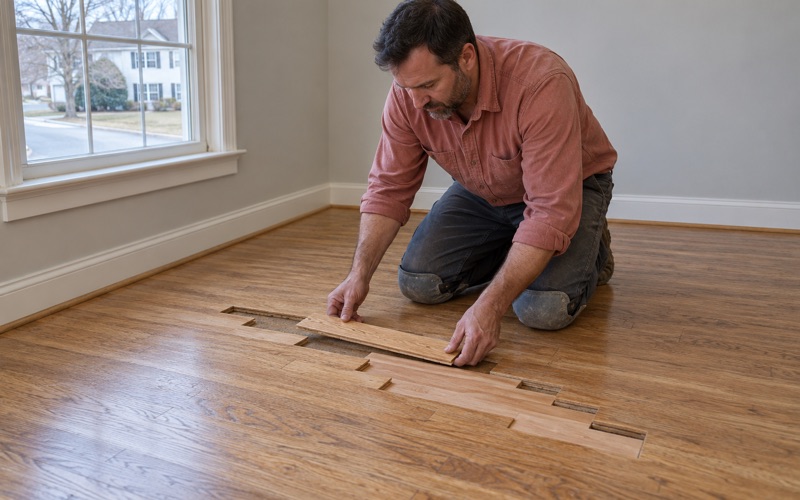
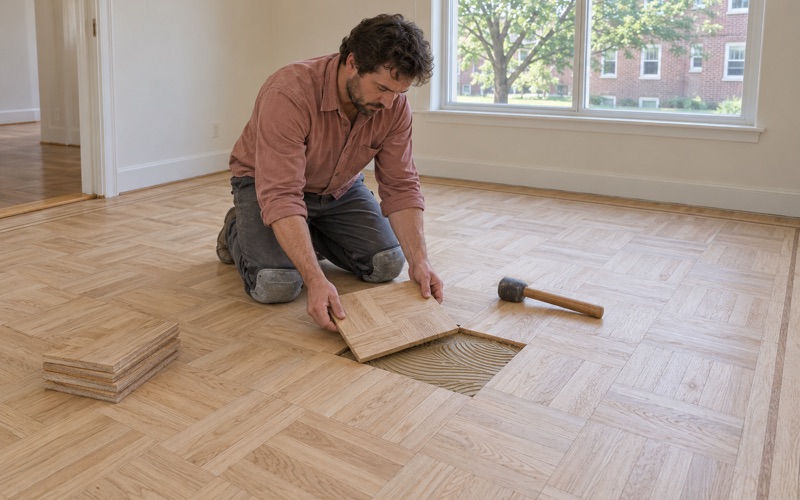
Patches tell us where the floor has already been opened. A board replacement done with the wrong width, or a filler strip around an old register, can be reworked with a weave-in repair so new boards are laced into the existing rows rather than butted against them. We mark each patch on the estimate so you can decide which ones are worth redoing.
Planning floor work in an older Elkridge house
Most of the Elkridge floors we work on are not on Lawyers Hill. The American Community Survey counts 43.5 percent of Elkridge homes as built in 2010 or later, so builder-grade hardwood, engineered floors and townhouse stairs make up much of our work here. The planning steps below apply to both, with a few extra ones for the older houses.
Samples on your own floor
Old boards rarely take stain the way new ones do, and two rooms of different ages may not match at all. Before a color is chosen, we lay stain and sheen samples on your own floor, in more than one room if the boards differ. That is the only reliable way to see whether a gray, a natural tone or a warmer color will work across the house.
Choosing the finish and the schedule
We choose finishes that fit Maryland’s VOC limits for wood coatings. A waterborne polyurethane dries faster and keeps more of the wood’s natural tone, while an oil-modified polyurethane adds amber and needs longer to cure. We plan the drying and fume time around the people and pets living in the house, so you know which rooms are out of use and for how long.
Rentals and itemized records
If an older Elkridge house is rented, the timing matters. Maryland requires a lead dust test at each change of tenant in pre-1978 rentals, and we schedule the floor work around that test rather than after it. Howard County also requires a rental housing license, issued by the Department of Inspections, Licenses and Permits, before a lease begins. Our invoice is itemized, separating ordinary wear from damage, which gives a landlord the documentation Maryland’s security deposit law asks for.
Stairs and basements
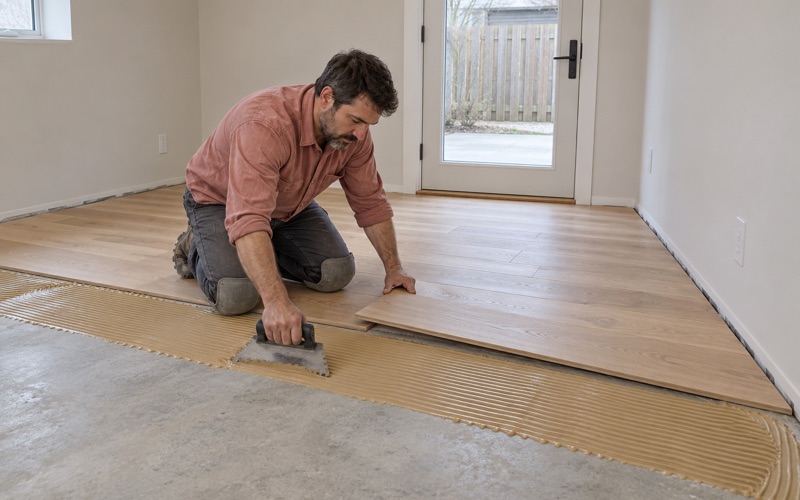
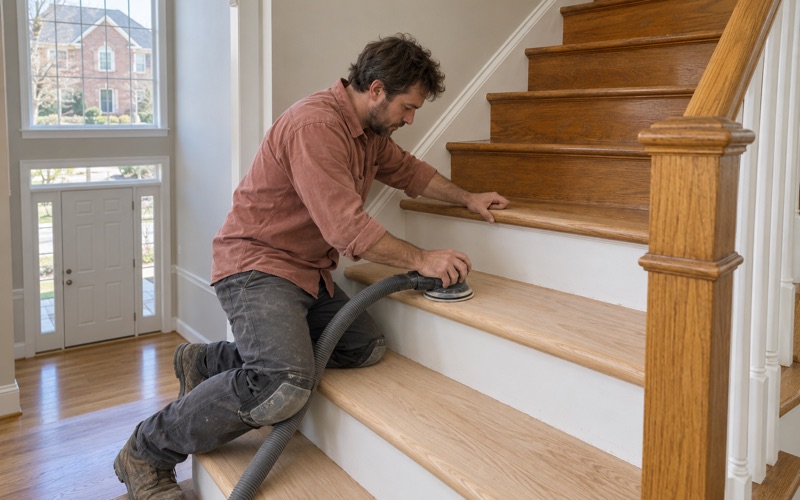
Stairs are quoted tread by tread, because a staircase is not priced by the square foot, and worn stair nosing gets its own line. Where a house has a finished basement, we take moisture readings on the concrete first and often recommend engineered wood or a different floor once we have read the moisture and the grade.
A written estimate you can keep
Every visit ends with a written, itemized estimate that lists what we found, what we recommend and what we would leave alone. Keep it for an insurer, a landlord file or a future sale; on a floor with a long history, that record becomes part of the house’s story too.
- 20+ Years Experience
- Written Itemized Estimates
- Dust-Contained Sanding