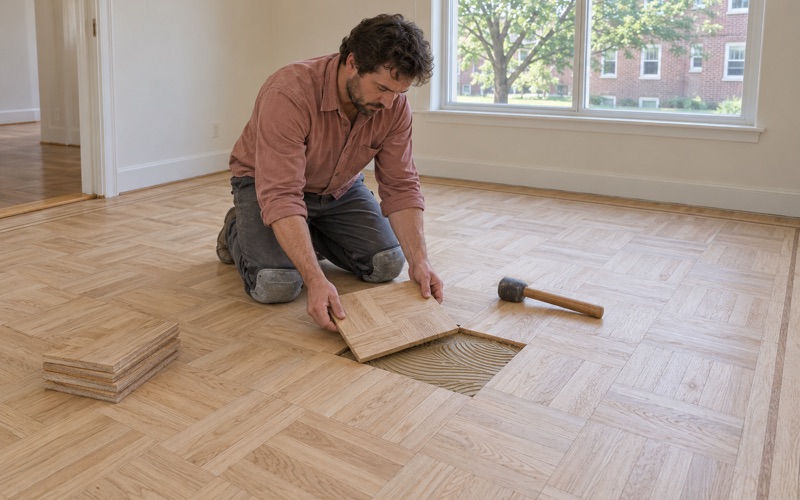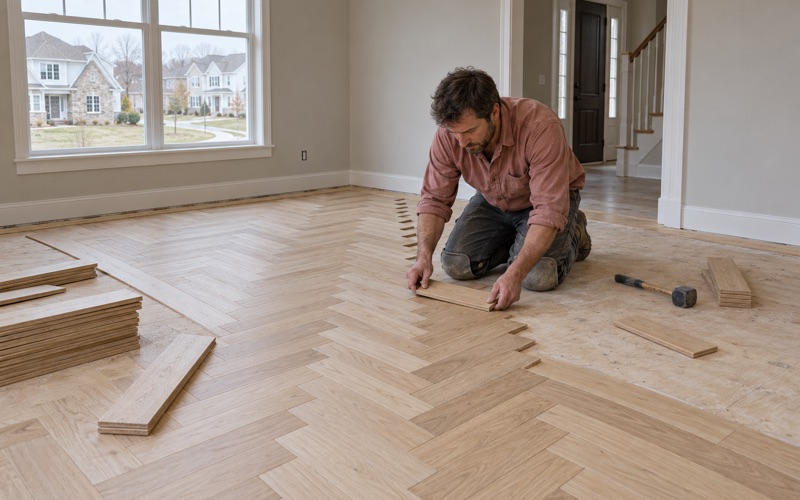
Severn Wood Flooring has handled wood-flooring in Laurel for owners and landlords alike over more than 20 years, and a large share of that work starts with one question: will these floors and stairs be ready when the inspector walks through? We repair loose and damaged boards, rebuild worn stair treads, refinish tired rooms and install new solid hardwood or engineered floors, and we plan each job around the date that matters to you.
In this city that date is often a rental inspection. Laurel runs its own rental licensing rather than leaving it to the county, and its published checklist speaks to floors and stairways in plain terms. We read that checklist the way a landlord has to, then quote the board, tread and finish work that brings a unit into good repair.
Owner-occupants get the same attention. Whether you are refinishing red oak strip flooring in an older house, fixing squeaky floorboards in a townhouse or replacing carpet with hardwood before a sale, we start with a walk-through and a written, itemized estimate you can keep.
Laurel’s Own Rental License and What Its Checklist Says About Floors
Landlords new to the area sometimes assume Prince George’s County handles their license. Inside the city limits it does not: the City of Laurel licenses its own rentals through the City of Laurel Department of the Fire Marshal and Permit Services, at 8103 Sandy Spring Road. That matters, because the neighboring unincorporated communities of North Laurel, South Laurel and West Laurel share the name but sit outside the city, so they are not under this license.
An inspection comes before the license
The city’s rental license application, revised in August 2023, is direct about the order of events. An inspection is required before a rental license is issued, so a unit with a loose board, a broken tread or a wobbly rail is a problem to solve before the inspector arrives. The application also states that property owners are responsible for property standards, and the fee is $40 per dwelling unit for single-family homes, townhouses, condominiums and apartments.
The floor and stair language
The city’s inspection form, FMPS Form #21, lists some of the code requirement items checked before a license issues. Item 1 says every floor, along with walls, windows and doors, must be “reasonably weather-tight, rodent-proof, and kept in good repair.” The same item says every inside and outside stairway and porch shall be in sound condition, with a secure handrail for three or more steps.
The form also notes it does not include every code requirement, so we treat it as a guide to the floor and stair items rather than the last word. Its wording is “good repair,” which is about condition. A floor with gaps an animal could use, boards that move underfoot or a stair that flexes is what we look for and fix first.
Why so many Laurel floors are rental floors
Rentals are not a sideline here. According to the 2024 American Community Survey five-year estimates, 55.8 percent of households in the city rent, which works out to 6,961 of 12,476 occupied homes. Of those, 2,130 renter households live in buildings of fifty or more units, and many of the rest rent townhouses or units in smaller buildings.
Looking for wood-flooring closer to South Laurel? See Wood-Flooring Services in South Laurel.
Board Repair, Stair Treads and Handrails Before the Inspection
Most pre-inspection floor work is repair, not replacement. We walk the unit, mark every soft spot, raised edge and gap, and then decide board by board what needs to come out. The goal is a floor that is sound and tight, and a written list of what we did that you can keep in the unit’s file.
Boards that move, gap or have been damaged
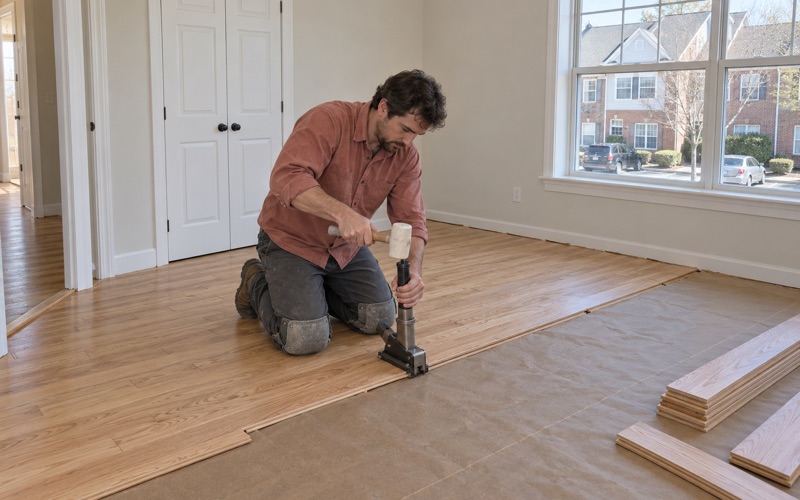
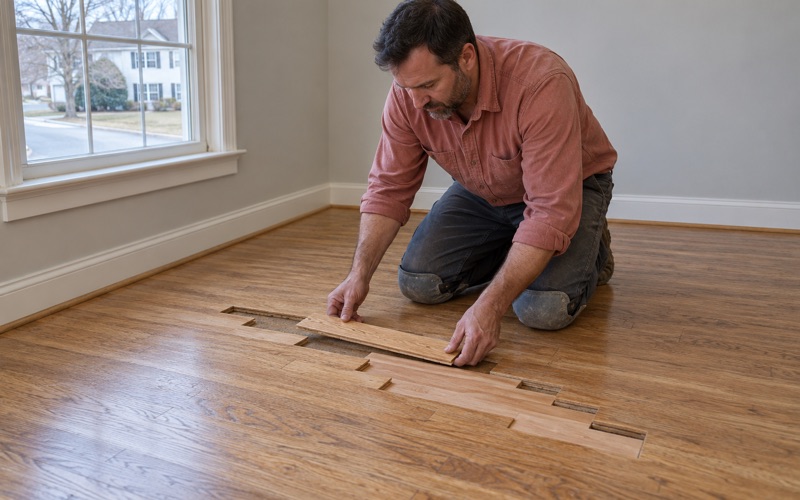
Loose boards and nail pops usually come from a subfloor that has shrunk or fasteners that have backed out over the years. We refasten from the face or from below where the joist is reachable, and where a board is split, stained through or rotted, we cut it out and weave a matching tongue and groove board into the floor. The same weave-in repair closes holes left where a floor register or an old wall was removed.
Heavy board gapping and cupping point to moisture, and winter gaps that close again in summer are normal seasonal movement. We read the floor with a moisture meter before deciding whether a gap is a repair or simply wood doing what wood does. Signs of termite damage or powderpost beetle frass get flagged to you before any boards are replaced, because covering live insect damage solves nothing.
Stair treads, nosings and handrails
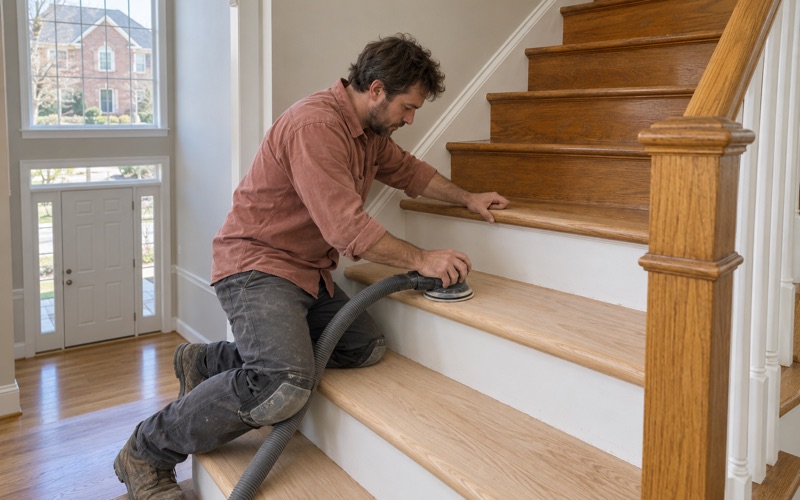
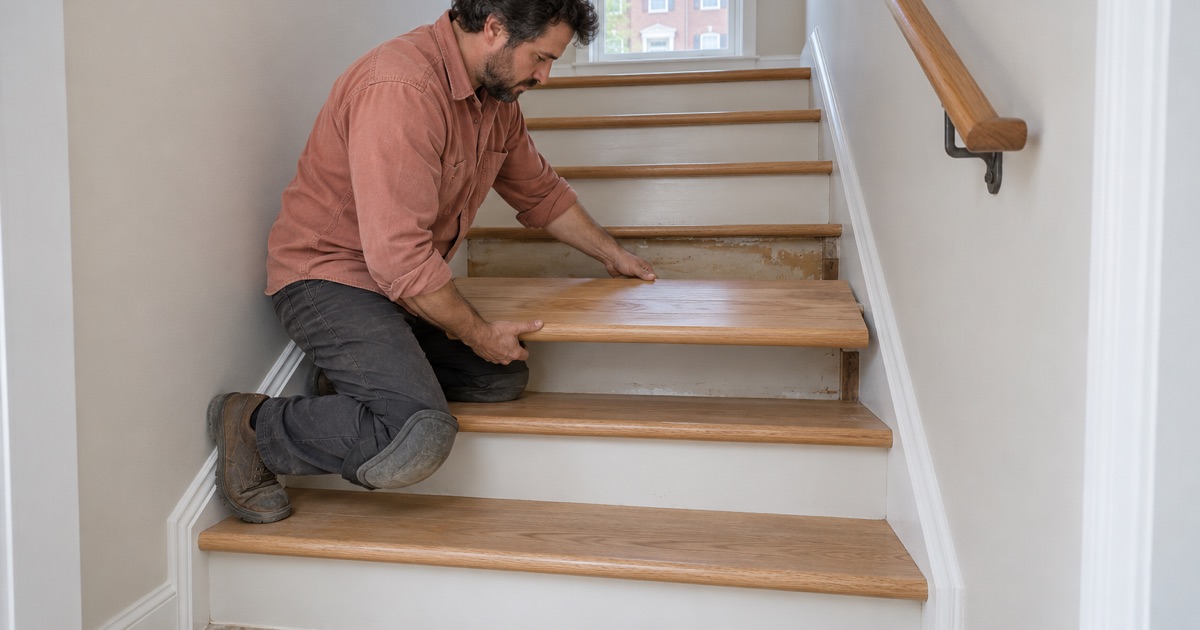
The checklist treats inside stairways seriously, and a loose stair is a hazard a tenant uses every day. We check each tread for splits, loose nosing and movement, and we quote stairs tread by tread rather than by the square foot, because every step is its own small job. Treads that cannot be saved are replaced with new hardwood stair treads, and risers are refinished or replaced to match.
Handrails get the same look. On a run of three or more steps the city wants a secure handrail, so we check that the rail is solid where it meets the treads and the wall, and we flag any loose post or bracket as part of the stair work. Fixing the rail and the treads in the same visit means one scheduling window instead of two.
Refinishing is a separate decision
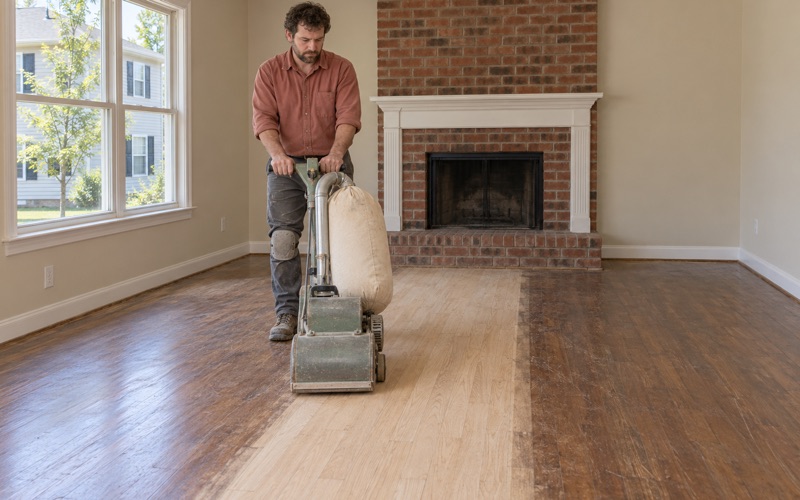
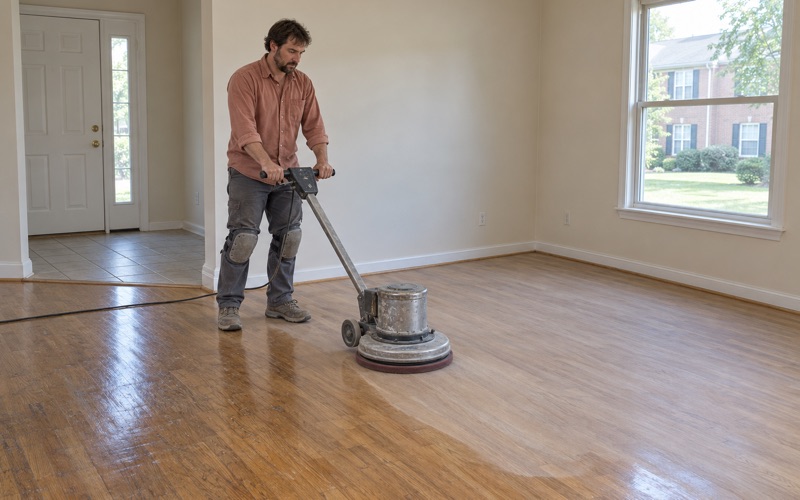
A unit with worn traffic lanes, rug shadow or old wax residue may still be in good repair; condition and appearance are separate questions. Many landlords refinish anyway between tenants, because a screen and recoat or a full sanding keeps a floor lasting longer and makes the unit easier to rent. We tell you which floors need repair, which could use a finish and which are fine as they are.
Bathroom and Kitchen Floors That Must Be Reasonably Waterproof
Item 5 on the city form says every bathroom and kitchen floor shall be reasonably waterproof to allow for easy cleaning. Solid wood in those rooms needs to be well sealed, and any spot where water has already gotten in needs attention before the inspection, not after.
Finding water damage before the inspector does
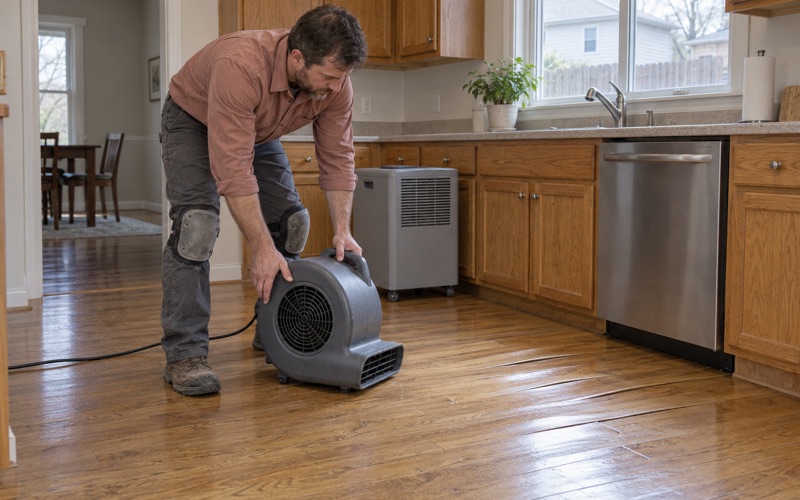
Dark water stains around a toilet, a dishwasher or a sink base often mean the finish has failed and the wood beneath has taken on water. We trace the source with you, dry the area and take moisture meter readings before cutting anything out. Boards that have cupped, crowned or started buckling are replaced, and the repair is documented room by room so you have a record for an adjuster or your own file.
Sealing the floor that stays
Where the wood is sound, the fix is usually finish. We recommend a waterborne polyurethane or an oil-modified polyurethane depending on how the room is used and how quickly the unit needs to be back in service, and we choose coatings that fit Maryland’s VOC limits for wood finishes. A tight, intact finish coat across the whole floor, edges included, is what keeps a kitchen or bathroom floor easy to clean.
When wood is not the right floor
Some kitchens and bathrooms in older rentals have resilient floor tile over black mastic, or wood that has been patched so often it no longer holds together. We identify old tile and mastic before any sanding and leave it to the right trade rather than disturbing it. Where a different floor makes more sense for a wet room, we will say so plainly.
Timing Floor Work Around Re-Inspection and the Summer Renewal
Laurel’s schedule gives landlords a chance to plan instead of react. Individual rental properties and buildings of up to eleven units must be re-inspected every three years, and the license itself is renewed annually between July 1 and September 1. For properties of twelve or more units, at least one-third of the units are inspected each year.
Working back from your inspection date
When we know your re-inspection year, we suggest walking the floors and stairs a few months ahead. That leaves time to order matching boards or stair treads, let new wood acclimate in the unit, and finish before the inspection without rushing a coat of finish. The application also notes that after an inspection showing no fire or life safety infractions, the city director may grant a one-year inspection extension, which makes a clean inspection worth the preparation.
Turnovers and the summer window
The best time to work on a rental floor is usually between tenants, and a turnover that lands near the summer renewal is a natural moment to put the unit in order. We contain dust to the rooms being worked on, seal doors and returns, and use HEPA vacuums throughout the job. We check the build year and any painted surfaces first, and in a pre-1978 rental we schedule around the lead dust test Maryland requires at each change of tenant.
A record you can keep
Every rental job ends with an itemized invoice listing the boards replaced, the treads rebuilt and the finish applied. That paperwork helps when a license file needs updating, and it gives you the supporting documentation Maryland’s security deposit law asks for when separating ordinary wear from damage. For multi-unit owners, we can keep a running record by unit so the next three-year cycle starts from what was done last time.
From Laurel Factory to today
Laurel began as a mill town in the early nineteenth century, first known as Laurel Factory, and grew into an early commuter town after the Baltimore and Ohio Railroad arrived in 1835. Today it is largely residential, with a historic district centered on Main Street and housing from every decade since. Whether your floors are original oak in an older house or builder-grade hardwood in a newer townhouse, we fit the repair to the floor in front of us.
- 20+ Years Experience
- Written Itemized Estimates
- Dust-Contained Sanding