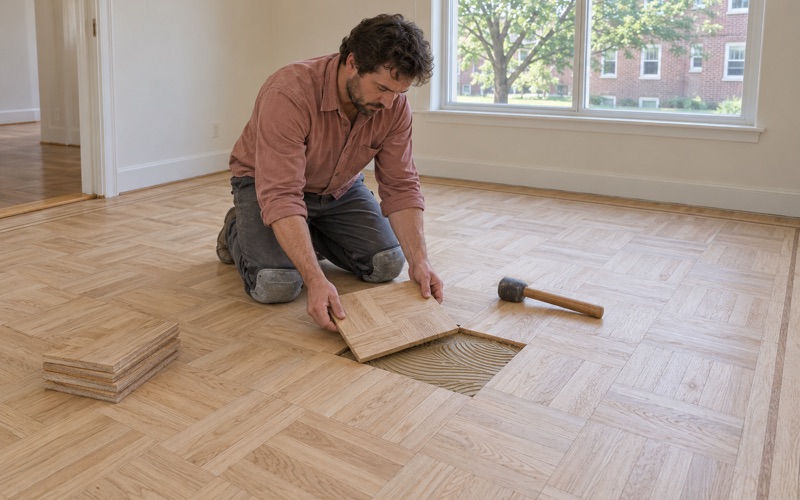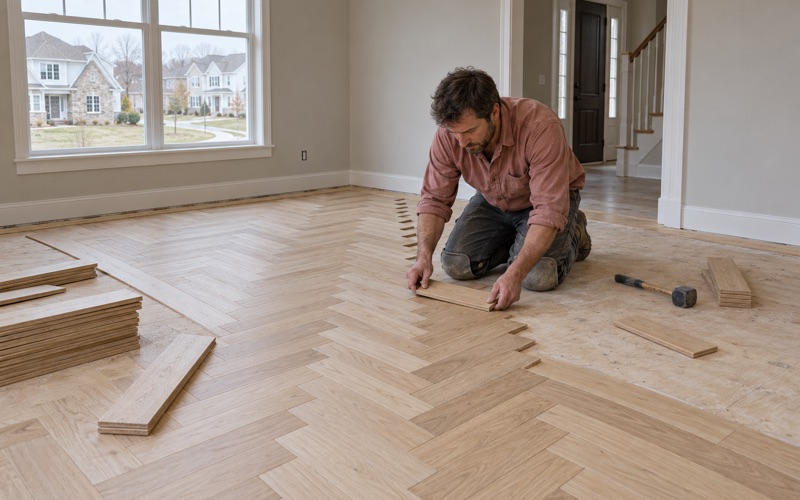
Severn Wood Flooring has spent more than 20 years on wood-flooring in Linthicum and the surrounding part of the county, and much of what we do here is work on floors that were laid long before anyone now living in the house was born. Old boards ask for a different approach than new ones. They have been sanded before, patched before and walked on for generations, so the first job is reading what is actually there.
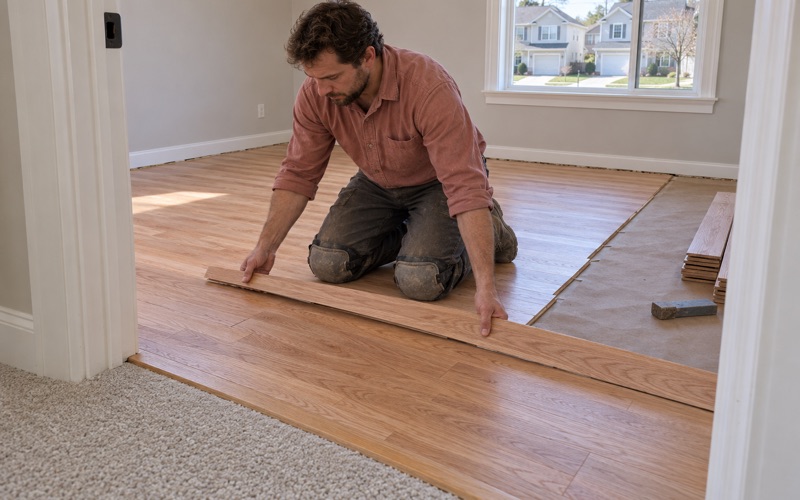
We refinish, repair and install solid hardwood and engineered floors, but in an older house the most common request is simpler to describe than to do. A homeowner wants to keep the floor they have, close up the scars left by past renovations and bring the color back without losing the character. That is the work this page is about.
We start every job with a walk-through and a written, itemized estimate. You get a document that lists each room, each repair and each finish step, and it is yours to keep whether or not we do the work.
Linthicum Heights: a 1908 railroad suburb and its houses
Linthicum is an unincorporated community in Anne Arundel County, directly north of BWI, and its oldest streets tell a specific story. Development followed the 1908 founding of the Linthicum Heights Company, and the neighborhood was platted beginning that year as a planned railroad suburb. Rail service connecting Baltimore, Annapolis and Washington made it practical to live here and work in the city.
A National Register district
The Linthicum Heights Historic District was listed on the National Register of Historic Places on May 31, 2006, and it appears in the Maryland Inventory of Historic Properties as AA-990. The Maryland Historical Trust describes it as a suburban community radiating from the intersection of Camp Meade Road (MD 170) and Maple Road, laid out along 17 tree-lined streets. The district counts 320 resources built between 1908 and 1939, 254 of them contributing.
Bungalows, Foursquares and the Revival styles
The houses span the Bungalow, American Foursquare, Colonial Revival, Dutch Revival and Tudor Revival styles. The earliest ones show the influence of the Arts and Crafts Movement, with stucco, rough stone and wood shingles on the outside. Those choices reflect what buyers wanted in a house before World War II, and the floors inside were built to the same era’s habits.
How many prewar houses there are
The district is only part of the picture. Census figures from the ACS 2024 five-year survey count 530 homes in Linthicum built in 1939 or earlier, out of 4,515 housing units. Most of the community was built later, but those 530 houses are where century-old floors are concentrated, and they are the houses this page is written for.
Looking for wood-flooring closer to Maryland City? See Maryland City Wood-Flooring.
What a century of living leaves in a floor
We never assume what species or construction is under an old house’s carpet or finish. Prewar floors in this region can be red oak strip flooring, white oak, maple or Douglas fir, and a single house may hold more than one after a hundred years of changes. We pull a register cover or look at a threshold edge first, because the answer decides how much sanding the boards can take.
Patches where walls and registers moved
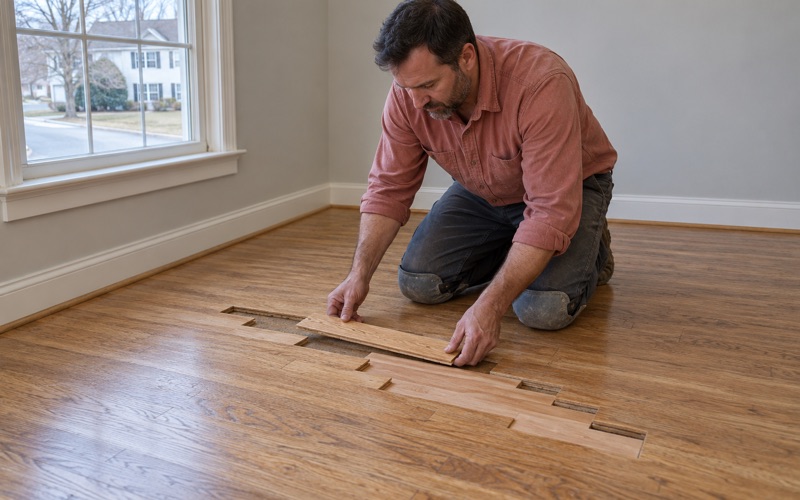
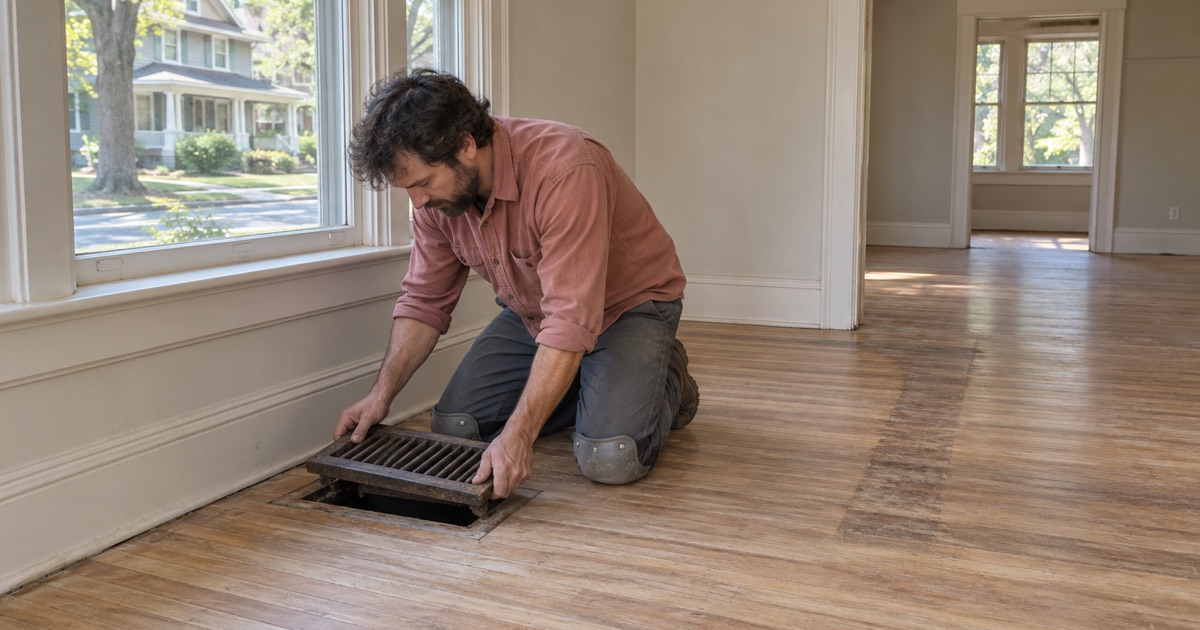
An old house rarely keeps its original floor plan. Walls come out to open a kitchen, a heating system is replaced and the old floor registers are abandoned, and each change leaves a gap or a mismatched patch in the boards. The quick fix is a piece of plywood or a strip of new wood laid square across the opening, and it shows from across the room.
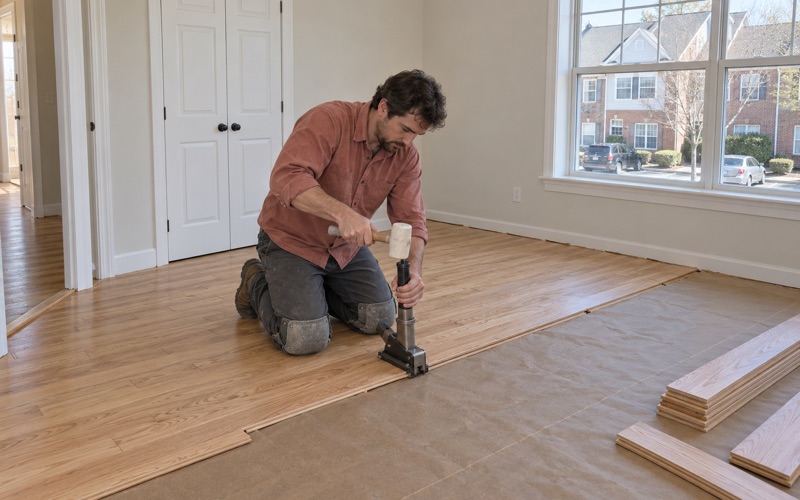
We close those openings with a weave-in repair. Boards are cut out at staggered lengths and new tongue and groove pieces are woven in so the joints land the way the rest of the floor runs. Once the patch is sanded and stained with the room, it reads as part of the original layout instead of a repair.
Gaps, cupping and loose boards
Old floors move with the seasons, and winter gaps between strips are normal in a heated house. Cupping, crowning or buckling is a different matter, because it usually points to moisture from below or a past leak. We read problem areas with a moisture meter before deciding whether a board can be flattened, refastened or has to be replaced.
Squeaky floorboards and nail pops are common in prewar houses, where face nails have worked loose over decades. We refasten from above where we can and check the subfloor and joist below when the movement is widespread. We also look for frass and soft spots that suggest powderpost beetle or termite damage, since a board that is crumbling underneath cannot be saved by sanding.
Old finishes and old adhesives
Many older floors carry layers of wax residue, the orange oak tone of an aging finish or peeling polyurethane from a past refinish. Some have been covered with resilient floor tile set in black mastic. We identify old tile and black mastic before any sanding begins and leave its removal to the right trade, because grinding through it is not a job for a floor sander.
Refinishing to keep a prewar floor rather than replace it
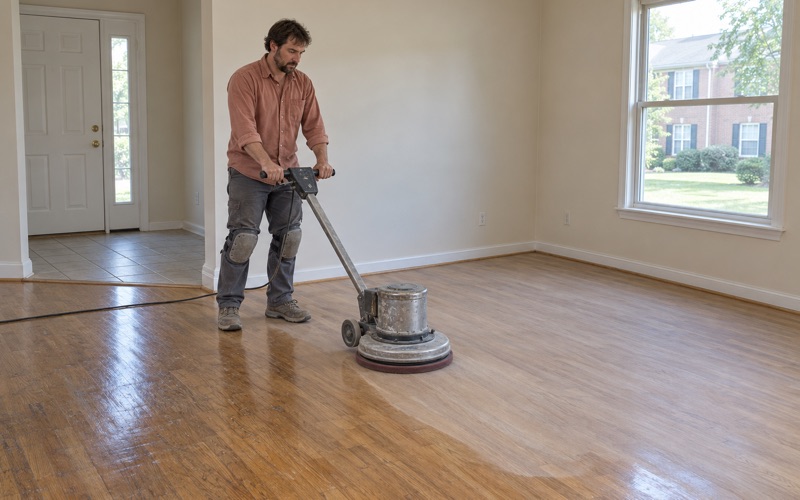
A solid hardwood floor laid around 1920 may already have been sanded several times. Every pass takes wood off the top of the boards, and the amount left above the tongue decides how many more refinishes the floor can handle. We check board thickness at a register or edge before choosing a grit sequence, and we plan the work around keeping as much wood as possible.
Lead-safe work in older houses
Every house built before 1978 falls under lead-safe renovation rules, and a house from 1908 to 1939 is well inside that window. We confirm the build year and check painted surfaces near the work, such as baseboards, shoe molding and stair risers, before any sanding starts. For rental floors in pre-1978 houses, we schedule around the lead dust test Maryland requires at each change of tenant.
Dust containment is part of every job, not an option. We seal doors and HVAC returns to the rooms being worked on and run HEPA vacuums through the sanding steps. That matters more in an older house, where finishes and paint near the floor may contain lead.
Sanding with a light hand
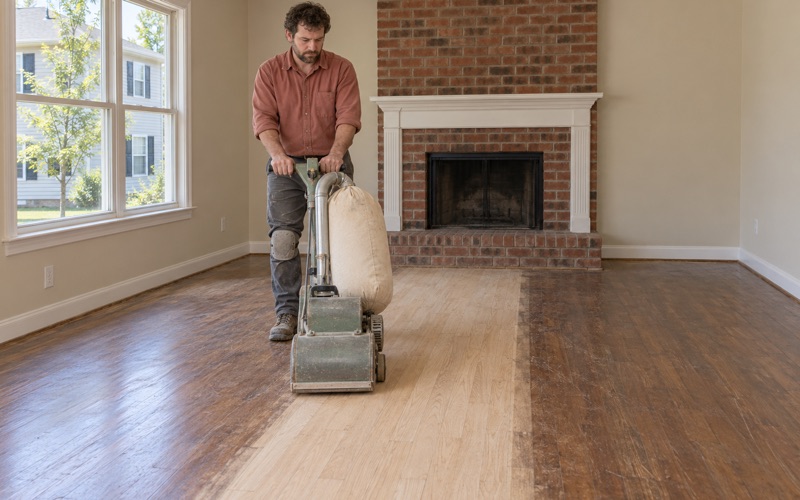
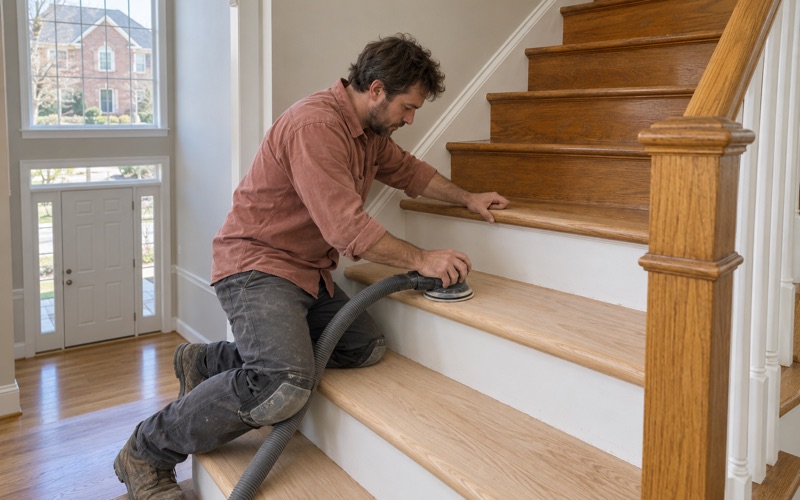
On a thin or uneven prewar floor, we use the drum sander only where it is needed and finish with an orbital sander so we do not cut through worn boards. Deep pet urine stains, water stains and rug shadow sometimes come out with sanding and sometimes do not. When they do not, board replacement with matching stock is usually better than sanding deeper across the whole room.
Picking a color and a finish
We lay stain and sheen samples on your own floor before you choose, because old wood takes color differently than new boards from a store sample. For the topcoat, we offer waterborne polyurethane, oil-modified polyurethane or a hardwax oil, each with a different look and upkeep. Every finish we use is chosen to fit Maryland’s VOC limits for wood coatings, and we plan fume and drying times around the people living in the house.
If the floor is sound and only dull, a full sanding may not be needed at all. A screen and recoat lightly abrades the existing finish and adds a fresh coat, which keeps wood on a floor that has little left to give.
Planning floor work in an older Linthicum house
The best results in a prewar house come from planning before the furniture moves. We walk the rooms with you, test suspect areas and write down what we find. Then we build the schedule around the house rather than the other way around.
What the National Register listing does and does not tell us
A National Register listing recognizes a district’s history, and owners are often unsure what it means for interior work. We do not tell customers that the listing governs their floors one way or the other, and we do not guess about permit rules. If you have a question about a specific plan, Anne Arundel County Inspections and Permits is the office to ask, and we are glad to describe the scope of work so you can.
Rentals and owner-occupied houses
Most of Linthicum’s homes are owner-occupied detached houses, but some are rented. For landlords, we provide an itemized invoice that serves as supporting documentation under Maryland’s security deposit law, and we can turn a floor around between tenants with a record of what was ordinary wear and what was damage.
Stairs, basements and water damage
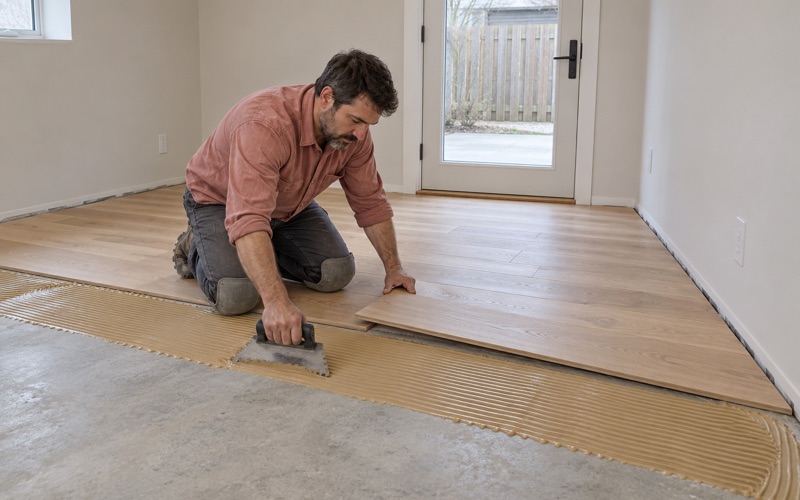
A staircase takes the hardest wear in most houses, prewar or not. We quote stair treads, risers and nosing tread by tread, because a staircase is not priced by the square foot. In a finished basement, we take moisture readings before recommending anything, and we often suggest engineered wood or a different floor once we have read the moisture and the grade.
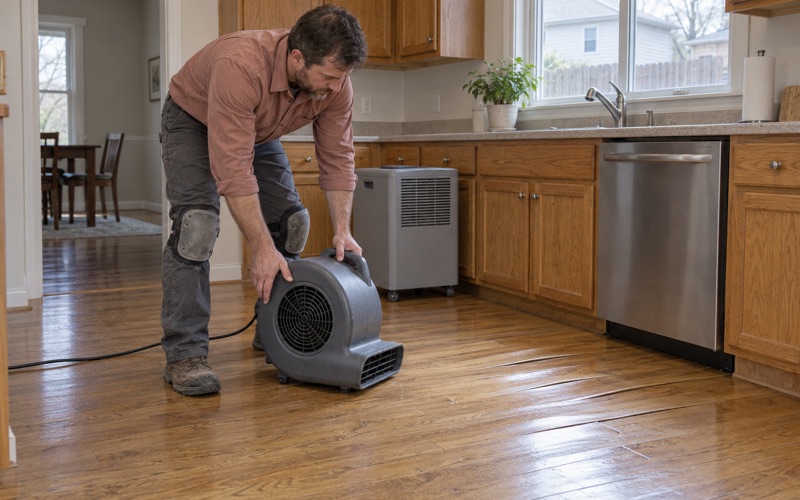
If an older floor has been soaked by a leak, we trace the water, dry the area and read the boards with a moisture meter. We then document the damage room by room for your adjuster, so the claim reflects what the floor actually went through.
Getting started
Tell us when the house was built, which rooms you want done and what you already know about earlier work. We will come look, sample the finish options on your floor and give you an itemized estimate. From there, the goal is a floor that still belongs to the house it was laid in.
- 20+ Years Experience
- Written Itemized Estimates
- Dust-Contained Sanding