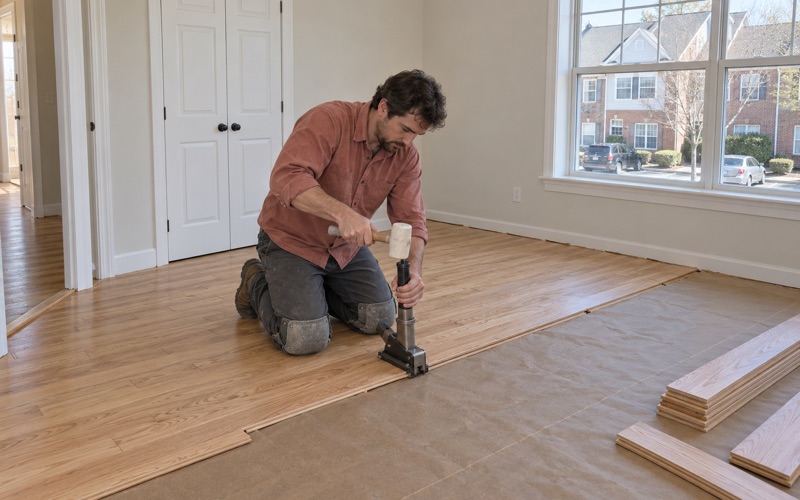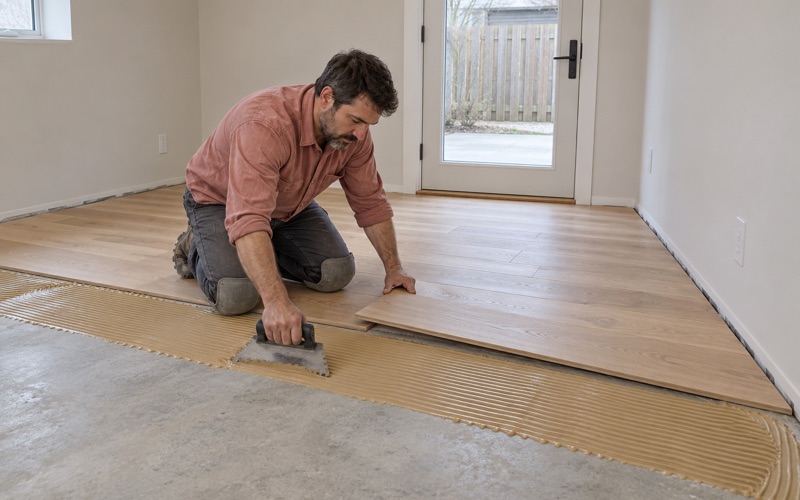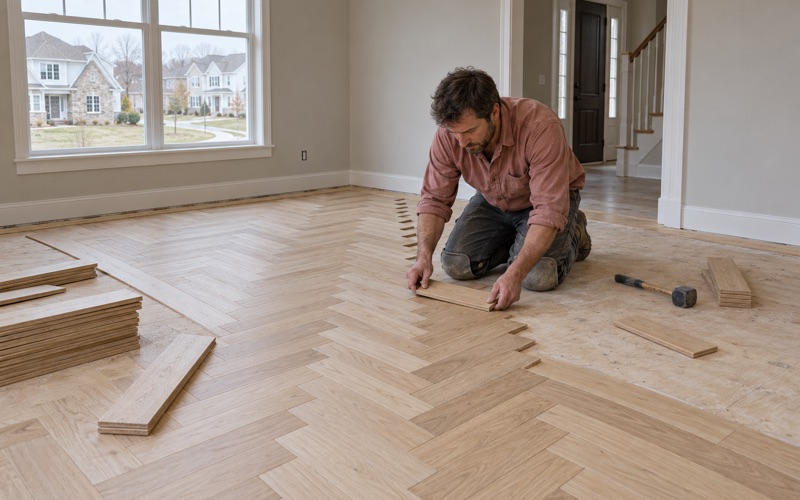
Severn Wood Flooring has handled wood-flooring in North Laurel and across this part of Howard County for more than 20 years, from a first refinish on a newer townhouse to repairs on a home being readied for sale. We sand and refinish solid hardwood, install site-finished and prefinished floors, recoat worn finishes, and fix the boards that go wrong in between. Every job starts with a written, itemized estimate you can keep on file.
Much of our work here is in homes that are only a few years old, where the floor has not failed so much as started to show its first traffic lanes, gaps and scratches. That is the right moment to act, because a screen and recoat on a sound finish costs far less than sanding the floor back to bare wood later. We tell you which of the two your floor actually needs.
Owners also call us before a sale or a resale. A floor with water stains, pet urine stains or a peeling topcoat reads as deferred maintenance to anyone walking through, and we can document and correct it room by room.
From Racetrack Land to Paddock Pointe
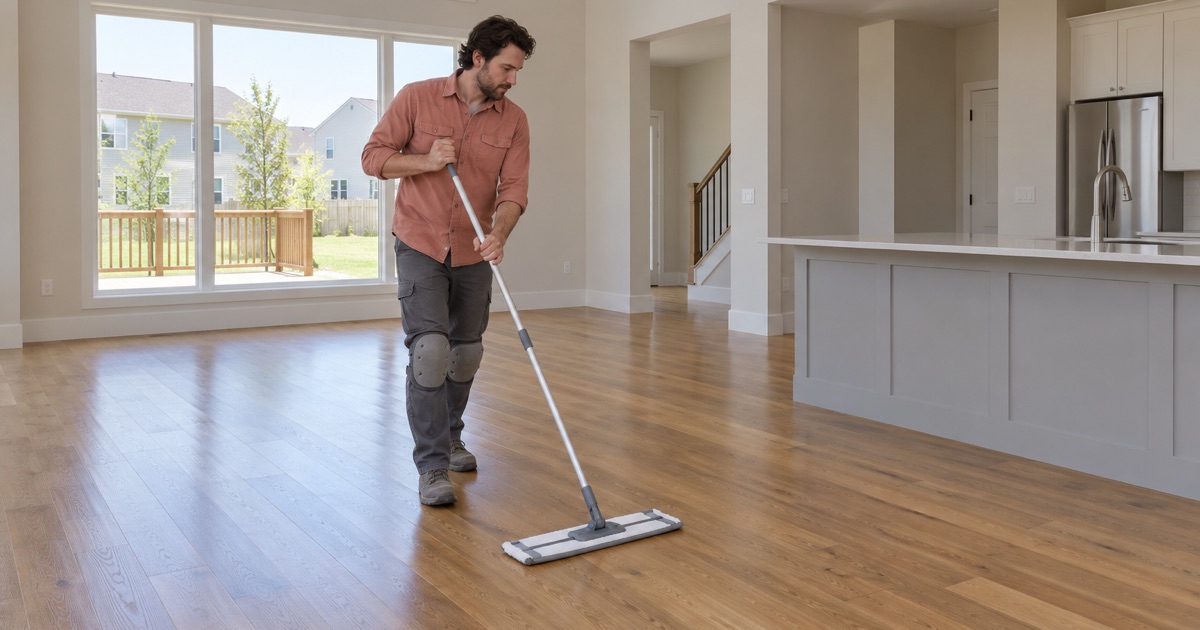
North Laurel is a census-designated place in Howard County, with a 2020 census population of 25,379, and it sits across the Patuxent River from the City of Laurel, a separate incorporated city in Prince George’s County. The distinction matters for floor work, because building permits and county housing programs here run through Howard County. Along Route 1, the most visible change in the community is happening on land that used to belong to a racetrack.
The Stronach Group has allocated 63 acres of Laurel Park property to Paddock Pointe, a mixed-use development along Route 1 that began construction in 2020 and is slated to include 1,000 homes along with commercial and office space. Reporting in 2024 noted that Laurel Park is due to close permanently when the Preakness returns to Pimlico in 2027, and that what happens to the remaining 166 acres is uncertain. The street names keep the history in view: Justify Run, Count Fleet Crescent, Ruffian Way and American Pharoah Lane are all named for racehorses.
Floors in North Laurel’s newest townhomes and condos
Census estimates for North Laurel count 119 homes built in 2020 or later and 989 more built in the 2010s, and attached single-family homes outnumber detached houses in the local housing stock. A home that new rarely needs a full sand-down. What it does need is attention to the early wear patterns every floor develops in its first years of daily use.
In a newer townhouse, the first problems are usually traffic lanes where the finish has dulled between the kitchen and the back door, fine scratches from chair legs, and winter gaps that open between boards when indoor heat dries the air. Seasonal board gapping tends to close again in humid months and is not a defect on its own. Cupping, crowning or buckling is different, because it points to moisture that has to be found before any repair.
What we check before touching a newer floor
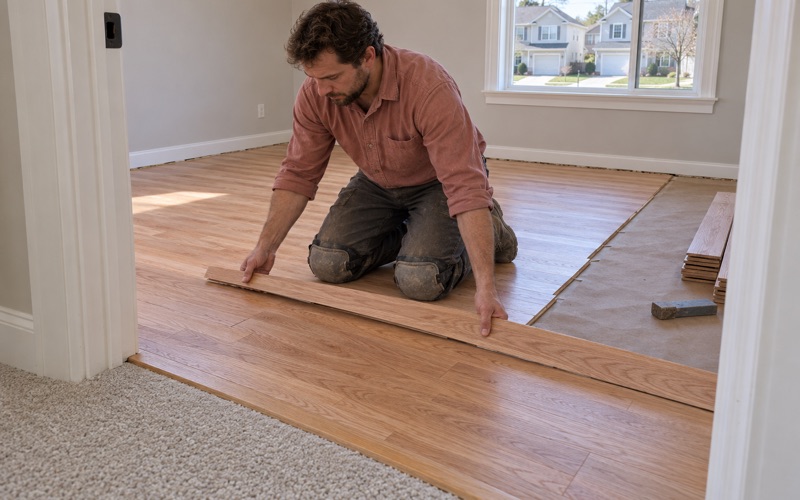
We start by identifying what is down: solid hardwood with a site-finished coat, a prefinished solid floor with factory edges, or an engineered floor with a wear layer of limited thickness. That answer decides whether a floor can be sanded at all, and how many times. An engineered wear layer too thin for a drum sander can often still take a screen and recoat.
We also take moisture meter readings in the boards and the subfloor before recommending anything, because a new home’s framing and concrete can still be giving up moisture. If a reading is out of line, we would rather explain why the floor is moving than sand boards that will keep shifting.
Looking for wood-flooring closer to Crofton? See Wood-Flooring in Crofton.
Moderate Income Housing Units: Owned, Perpetually Affordable, Resold Through the County
Some of the new Paddock Pointe homes are part of Howard County’s Moderate Income Housing Unit program, known as MIHU. The county describes MIHU as an inclusionary zoning program that requires developers of new housing in specific zoning districts to sell or rent a portion of their units to moderate income households. For 2025, the county median income was $140,971, and MIHU purchasers had incomes at or below 80 percent of it.
Six new Paddock Pointe closings in 2025
The county’s MIHU Annual Analysis for 2025 lists six new-construction MIHU sales at Paddock Pointe, each at $260,718, on Justify Run and Count Fleet Crescent, with settlements between late August and mid-November. The same report lists two Paddock Pointe resales that year, one on Ruffian Way at $306,056 and one on American Pharoah Lane at $242,606. The rental side of the development, Phases 2 and 4, holds 628 units, of which 94 are on-site MIHUs.
For the households who bought those homes, the floor is part of a purchase in a brand-new neighborhood. Keeping it in good shape from the start costs far less than catching up on years of wear just before a sale.
Perpetual affordability and county-run resale
The county states plainly that MIHU homes are perpetually affordable, so a unit stays in the program through every later owner rather than leaving it after a set term. Resale runs through the county, and a 120-day priority period applies once an MIHU owner requests a resale price. If a unit is instead sold at market rate, the net proceeds are split 50/50 with the county.
The county sets MIHU resale prices under its own program rules, and we do not estimate them or advise on them. Our part is narrower: making sure the floor itself is in sound, documented condition when the unit changes hands.
Keeping an Owned Unit’s Floors in Resale-Ready Repair
Howard County has a memorandum of understanding with the Howard County Housing Commission to purchase MIHUs that need significant repairs before they can be resold. The report does not itemize which repairs that involves, and we are not part of the arrangement. For an owner, the useful takeaway is simpler: small floor problems are cheaper to fix while they are still small, on a schedule the household chooses.
Repairs that keep a floor from becoming a project
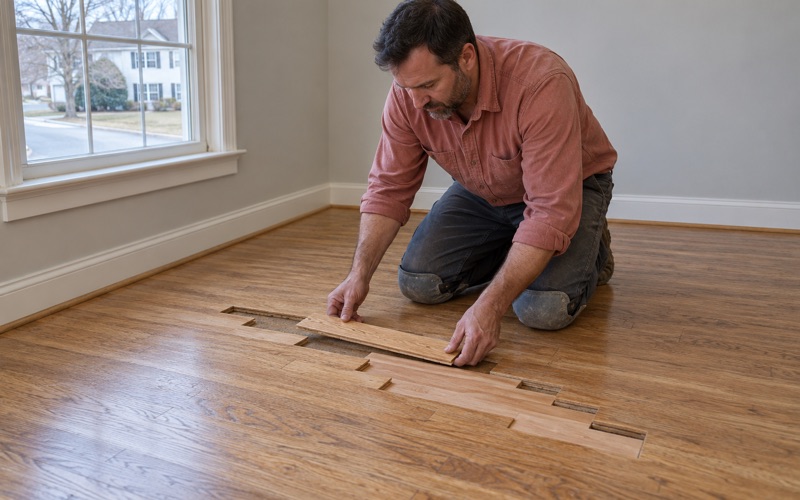
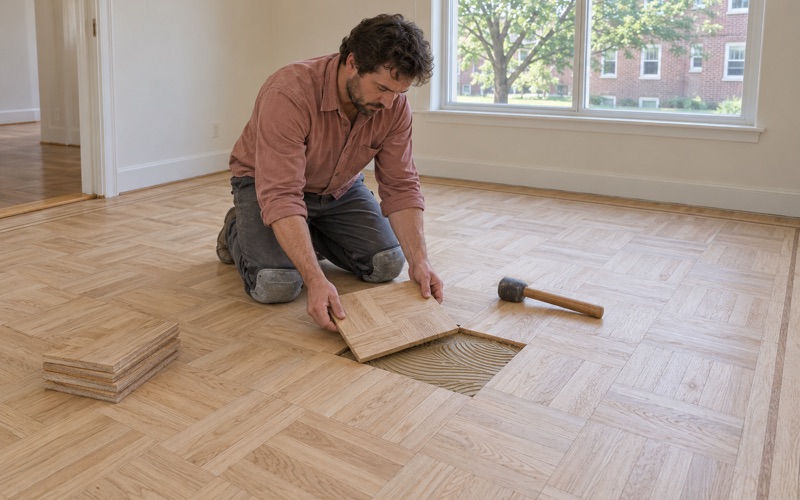
Most of what we fix in a younger home is local. A water stain by the dishwasher, a nail pop that squeaks underfoot, or a gouged board in an entry can usually be handled with a board replacement or a weave-in repair, where new boards are laced into the existing tongue and groove rather than cut in along a straight seam. Done well, the repair disappears into the room.
Pet urine stains are the exception that often runs deeper than it looks. Once urine has soaked past the finish into the wood, sanding seldom lifts it, and the stained boards have to come out. We show you which boards need replacing before we quote the job.
Refresh the finish before it wears through
A finish that has dulled but not worn through to bare wood can usually be screened and recoated in a single day, without the dust and downtime of a full refinish. We abrade the existing coat, clean the floor with a HEPA vacuum and apply a fresh coat of waterborne polyurethane, with finishes chosen to meet Maryland’s VOC limits for wood coatings. Once bare wood shows in a traffic lane, the window for a recoat has passed and the floor needs sanding.
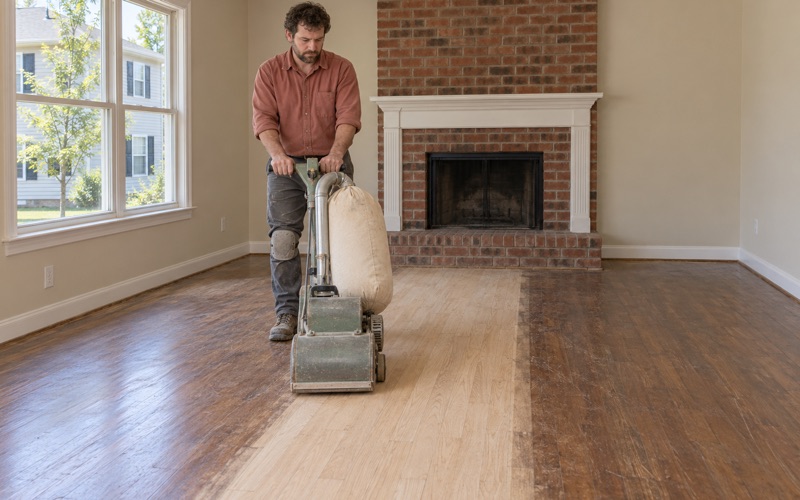
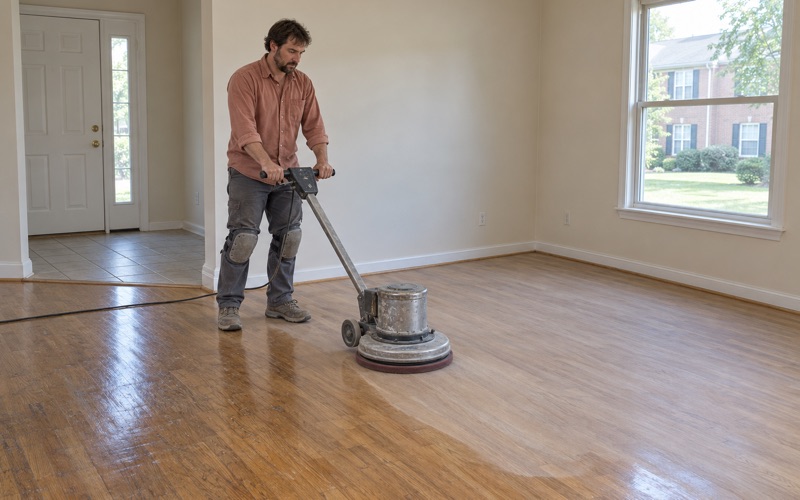
When a full sanding is needed, we work through a grit sequence with a drum sander and an orbital sander, and we keep dust contained to the rooms being worked on, with doors and returns sealed. We also lay stain and sheen samples on your own floor before you commit to a color. A sample board under store lighting rarely matches what you see at home.
Paperwork you can keep
Every job ends with an itemized invoice listing the rooms, the repairs and the finish used. If water was involved, we trace and dry it, take moisture meter readings, and record the damage room by room for an adjuster. That record is worth keeping for an insurer, for your own files, or for a future sale.
Planning Floor Work in a Newer North Laurel Home
North Laurel’s housing is not all new, and the build year changes the job. The 2024 census estimates put about a quarter of the community’s homes in the 2000s, with smaller numbers from earlier decades reaching back before 1940. For any home built before 1978, we confirm the build year and check painted surfaces such as baseboards and stair parts before sanding, because lead-safe renovation rules apply.
Older flooring layers and below-grade rooms
In older homes, we look for resilient floor tile and black mastic under carpet or sheet flooring before any sander touches the floor. Those materials are identified and left for the right trade rather than ground into dust. Once they are handled, we can plan the wood floor that goes above them.
Finished basements call for a different decision. We read the moisture and the grade first, and we often recommend engineered wood or a different floor for a below-grade room, since solid hardwood on a basement slab is prone to cupping. Moisture readings on the concrete come before any wood goes down.
Scheduling around the household
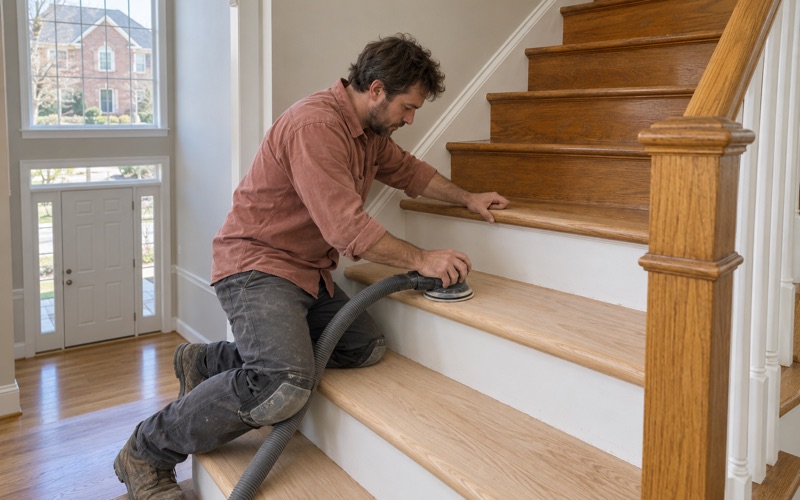
Waterborne finishes dry faster and carry less odor than oil-modified polyurethane, while hardwax oil gives a lower-sheen look that can be spot-repaired later. We go over fume and drying times with you, so you know when rooms can be walked on and when furniture can return. On stairs, we quote tread by tread, because a staircase is not priced by the square foot.
If your townhouse sits in a community with its own association, we read the association’s documents with you rather than assuming what they say about floor work. Then we put the scope, the finish and the timeline in writing, so the plan you approve is the plan we carry out.
Whether you own a Paddock Pointe unit finished in 2025 or a North Laurel house from the 1970s, the first step is the same: a visit, a set of readings and a written estimate. Call Severn Wood Flooring to schedule yours.
- 20+ Years Experience
- Written Itemized Estimates
- Dust-Contained Sanding