
Severn Wood Flooring offers screen and recoat hardwood floor service in Severn, MD, backed by 20+ years of floor work, and serves surrounding cities including Jessup, Elkridge, Odenton, Glen Burnie and Linthicum. A screen and recoat lightly abrades the existing finish and adds a fresh coat on top, without sanding to bare wood. It brings back the look of a dull, scuffed floor in a fraction of the time and dust of a full refinish, when the floor is a good candidate for it.
The catch is that word candidate. A recoat only works when the wear is still in the finish, when the existing finish will bond to a new coat, and when nothing like wax or polish sits on the surface. We test for all of those before we quote, rather than finding out when a fresh coat peels off a month after the job.
When A Screen And Recoat Is The Right Choice
Dull, Scuffed Finish Over Healthy Wood
The ideal floor for a screen and recoat looks tired rather than damaged: the shine is gone in the walkways, there are fine scratches from pets and chairs, and the color underneath is still even. Because the wood itself has not been reached, a fresh coat restores the protective layer and brings the sheen back across the whole room.
Catching the floor at this stage is the cheapest way to keep a hardwood floor looking good for decades. Each recoat takes the wear instead of the wood, which means fewer full sandings over the life of the floor and more wood left above the tongue for when one is finally needed.
Rental Turnovers And Listing Preparation
A screen and recoat fits neatly into the short window between tenants or before listing photos. Landlords with rented townhouses use it to freshen builder-grade floors that are worn but not damaged, and sellers use it when the floors are sound but look dull. We itemize the work on the invoice, which helps a landlord keep a clear record of routine maintenance separate from any damage charges.
Engineered Floors With A Thin Wear Layer
Engineered flooring with a thin wear layer cannot be sanded, or can be sanded only once, so a recoat is the main way to maintain it. Renewing the finish regularly keeps wear from ever reaching the thin layer of real wood. We check what kind of factory finish is on the floor first, because some need a specific bonding step before a new coat will hold.
When It Will Not Work
Gray Traffic Lanes, Stains And Deep Scratches
Once the finish has worn through and the wood in the traffic lanes has turned gray, a new coat seals the gray in rather than removing it. The same goes for pet urine stains, water stains, deep scratches and dents that have reached the wood. Those floors need sanding to bare wood before any new finish goes on, and recoating them only postpones the job while adding cost.
Wax, Polish And Contaminated Floors
Polyurethane will not bond to wax residue, and many floor polishes and cleaning products leave films that cause the same problem. A recoat over a waxed or polished floor can peel, bead up or stay soft. We test for wax and contamination before quoting, and where a floor has been waxed in the past, we recommend a full sanding instead.
Some contamination can be removed with the right cleaning and abrasion before a recoat. We tell you honestly when a floor has crossed from cleanable to needing a full sanding, because a failed recoat costs more than either option done right.
Changing The Color
A recoat cannot change the stain color, remove orange tones from an ambered oil-based finish or lighten a dark floor. The color lives in the wood under the finish. If a new color is what you want, a full sanding is the only route, and we will lay stain samples on your floor once it is sanded.
How We Screen And Recoat A Floor
Testing, Cleaning And Preparing
We start by testing a small area for wax and adhesion, then deep clean the floor to remove the dirt and residue that would otherwise be trapped under the new coat. Loose boards, nail pops and protruding face nails are fixed before anything else, since a screen will catch on them.
Furniture is moved out of the rooms, doorways are taped off, and return vents in the work area are covered. The process makes far less dust than a full sanding, but the fine powder from screening still needs to be contained.
Screening The Existing Finish
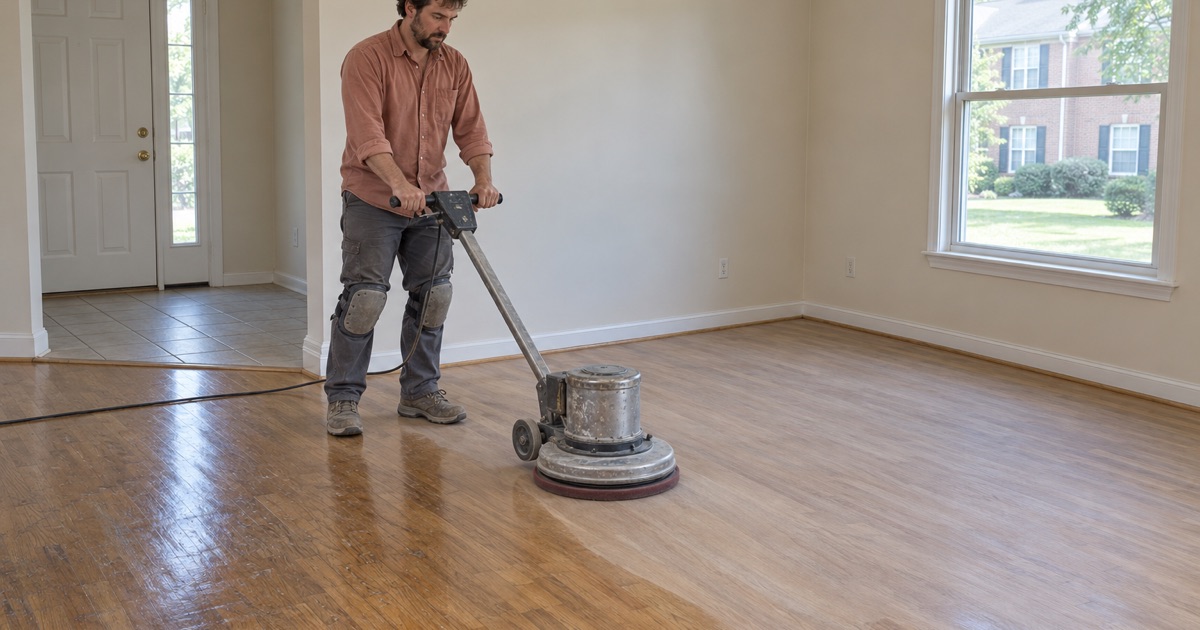
A buffer fitted with an abrasive screen or pad lightly scuffs the entire surface, giving the new coat something to grip. The edges and corners are abraded by hand. This step does not cut into the wood; it only dulls the existing finish so the new one bonds.
After screening, the floor is vacuumed with a HEPA vacuum and wiped down with a tack cloth so no dust is left under the new coat. Any dust left behind shows up as grit in the finish.
Applying The New Finish
We apply a fresh coat of finish, usually a waterborne polyurethane that dries quickly and keeps odor low, though an oil-modified polyurethane can be used where it matches the existing finish. Every product meets Maryland’s wood coating limits under COMAR 26.11.39.
You can choose a different sheen level from the original. Moving from gloss to satin, for example, makes future scratches less visible, and a recoat is a good time to make that change.
Drying, Curing And Care
Light foot traffic is usually possible within a day, but furniture and rugs need longer while the finish cures fully. We leave you a written schedule and care instructions, including felt pads for furniture and a cleaner that will not leave a film for the next recoat to fight.
- 20+ Years Experience
- Written Itemized Estimates
- Dust-Contained Sanding