Severn Wood Flooring has handled wood-flooring in Severna Park for more than 20 years, and most of that work happens in houses whose owners plan to stay. We refinish, repair and install hardwood for people who are fixing the floor for themselves rather than for a listing photo. That changes the priorities: durability of the finish, how well a repair blends, and how the household lives through the job.
A floor that has carried one family for decades tells its own story in the wear. We read it before quoting: where the traffic lanes run, how many times the boards have been sanded, whether an earlier refinish left wax residue or peeling polyurethane, and where a patch or an addition meets the original floor. The estimate we hand you is written and itemized, so you can keep it with the house records for as long as you own the place.
Nothing here is a cosmetic flip. The goal is a floor that holds up through the next twenty years of the same family walking on it.
Severna Park’s Detached Houses and the Owners Who Stay
Severna Park is an unincorporated census-designated place in Anne Arundel County, and its housing is about as uniform in type as a community gets. According to the Census Bureau’s 2024 American Community Survey five-year estimates, 13,068 of its 14,215 homes are one-unit detached houses, or 91.9 percent. Of 13,649 households, 12,376 are owner-occupied, or 90.7 percent.
Those two numbers shape our work more than any trend in flooring. A detached house with an owner in it means one decision-maker, one set of floors that has been lived on continuously, and nobody waiting on a tenant turnover date. It also means the floor usually carries the history of that one household, good maintenance and bad.
A detached house also gives us room to work. Equipment comes in through the garage or a side door, the sanders’ dust collection can be staged outside the living space, and there are no shared walls or neighbors below to schedule around, which keeps a full-house refinish moving at a steady pace.
Houses from the 1960s, 1970s and 1980s
The same survey counts 7,913 units built 1960-1989, which is 55.7 percent of the housing stock, and puts the median year built at 1979. Some houses from those decades went up with solid hardwood strip flooring, while others got carpet, sheet vinyl or parquet from the start. We never assume what sits under a carpet pad until we lift a corner by the tack strip and look.
That 1979 median also lands right beside the 1978 line that matters for sanding. Homes built before 1978 fall under lead-safe renovation rules, so we confirm the build year and check any painted surfaces near the floor, such as baseboards, shoe molding and stair risers, before a sander is switched on.
What Earlier Owners Glued Down
Kitchens and basements in houses of this age sometimes hold old resilient floor tile set in black mastic. We identify it before anything is sanded and leave that layer to the right trade rather than grinding through it. Once it has been handled properly, we can plan the wood that goes over or in place of it.
Looking for wood-flooring closer to North Laurel? See North Laurel Wood-Flooring.
Floors After Decades: Traffic Lanes, Old Refinishes and Repairs
A floor walked on by the same family for thirty or forty years wears in a pattern, not evenly. The finish goes first in the traffic lanes from the kitchen to the back door, down the hall and in front of the sofa, while the boards under furniture and rugs keep their color and leave a rug shadow when everything is moved out. Pet urine stains, water stains by an exterior door and gray patches near a radiator or sink all show up in the same inspection.
Screen and Recoat or a Full Sand
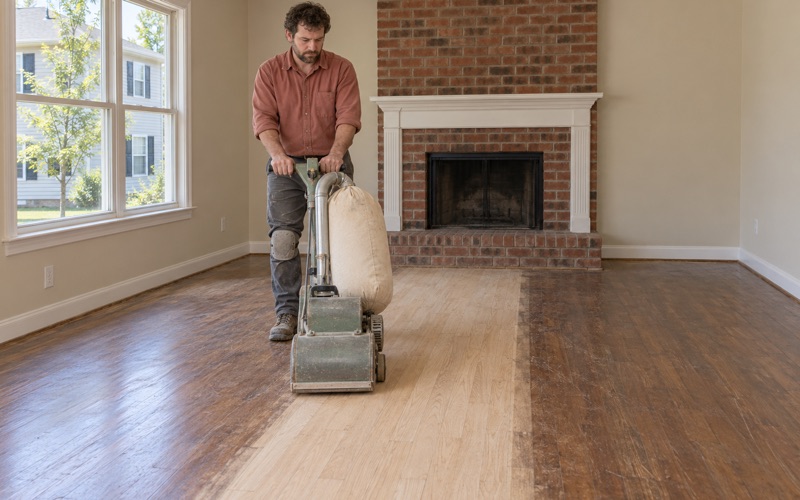
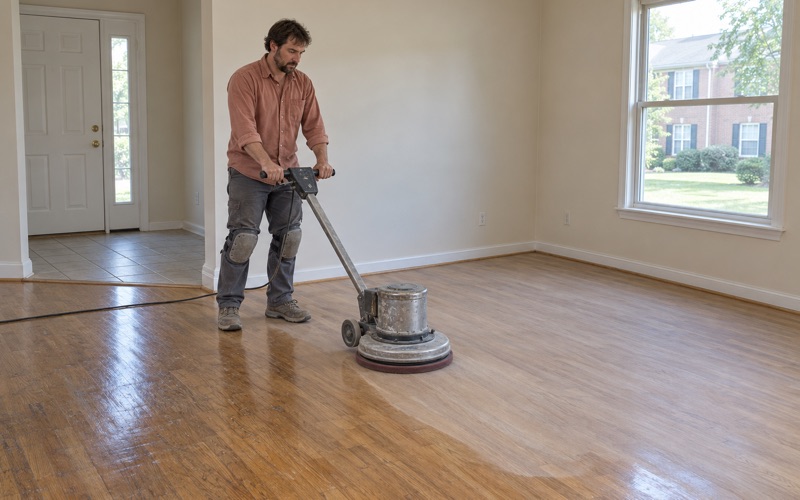
If the wear is only in the finish and the wood itself is still clean, a screen and recoat can restore protection without taking the floor down to bare wood. Once the traffic lanes have gone gray and the stain has worn through, the floor needs a full sand, worked through a grit sequence with a drum sander on the field and an orbital sander at the edges. We tell you which one your floor needs and why, rather than selling the bigger job by default.
What Earlier Refinishes Leave Behind
A floor in a long-owned house may have been sanded two or three times already, and every sanding takes wood off the top of the tongue and groove. Before we commit to another full sand, we check how much wood remains above the tongue at a heat register or a threshold, and we look for exposed face nails and nail pops that signal thin boards. Wax residue from older maintenance routines has to come off completely, or the new polyurethane will not bond and will peel.
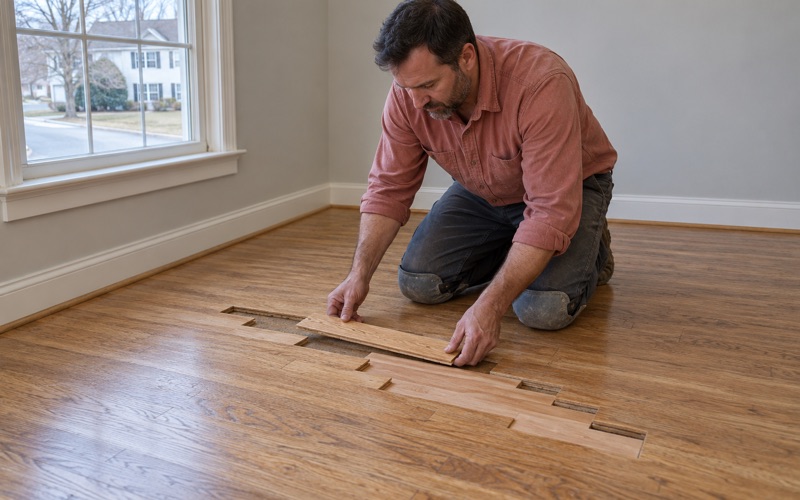
Older repairs show up too, such as a board face-nailed in after a leak or a patch of a slightly different width. Where a repair has failed, we replace the affected boards rather than sanding around them, and squeaky floorboards can often be quieted from below at the joist if the basement ceiling is open.
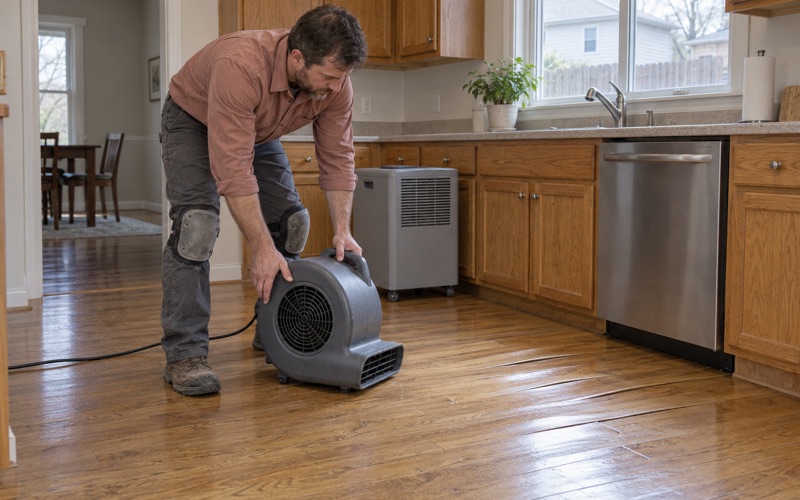
Gaps deserve a second look before anyone fills them. Winter gaps that open in the heating season and close again in summer are normal seasonal movement, while gapping that stays open year round, or boards that are cupping or crowning, point to a moisture source we want to find before sanding flat a floor that will keep moving.
Joining New Boards to Old in Additions and Opened-Up Rooms
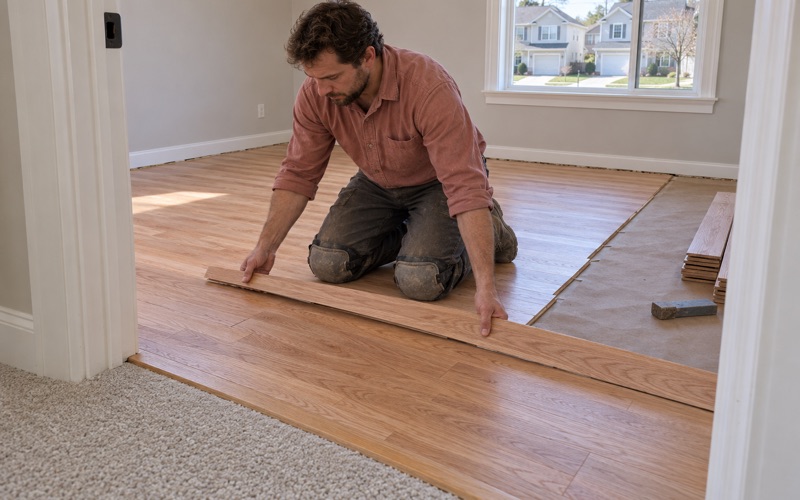
Owners who stay tend to change the house around them. Over the decades a family room gets added, a wall between the kitchen and dining room comes out, or a porch is enclosed, and each change leaves a seam where new flooring meets the old. Getting that seam right is often the hardest part of the job and the part an owner notices every day afterward.
Weaving In Rather Than Butting Up
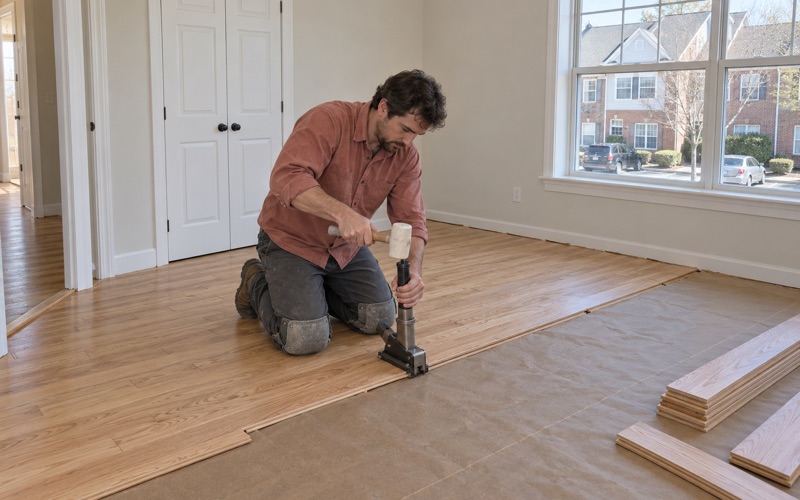
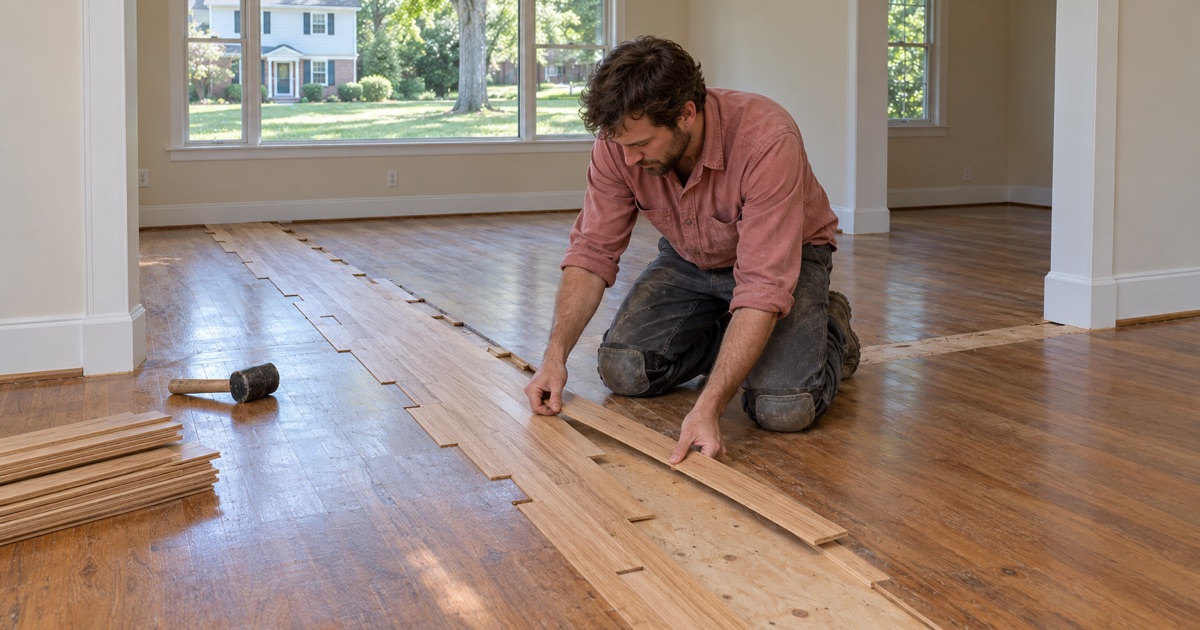
Where an old wall or floor register came out, we patch the gap with a weave-in repair, staggering new boards into the existing rows so the patch disappears instead of reading as a straight line across the room. The same approach joins an addition to the original floor when the widths and species can be matched. When they cannot, we would rather set a deliberate threshold or border than force a near-match that looks wrong in every light.
Matching Color Across Old and New Wood
Boards that have been under a finish for forty years have aged to a different tone than new stock, and an older oil-modified finish often leaves oak looking orange. Sanding both areas together and finishing them in one pass narrows the gap. We lay stain and sheen samples on your own floor, across the seam, before you choose a color, because a sample board in a showroom tells you nothing about how new and old wood will read side by side in your rooms.
New boards for an addition also need time to acclimate in the house before installation, and we take moisture meter readings on both the new stock and the existing floor. Installing wetter wood against drier wood is a common cause of gapping and cupping along the joint a season later.
Additions Built on Concrete
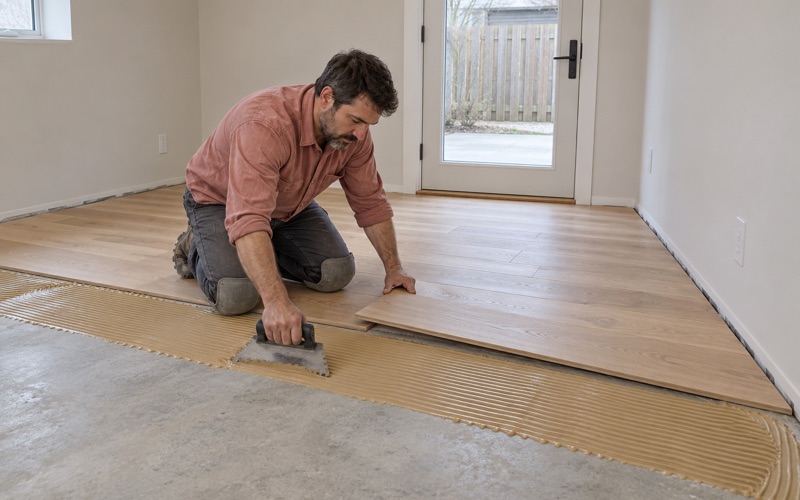
Some additions and finished basements sit on concrete rather than a wood subfloor. There we take moisture readings on the slab before any wood goes down, and if the numbers or the grade argue against solid hardwood, we recommend engineered wood with a suitable wear layer or a different floor altogether, rather than a solid floor likely to cup.
Planning Floor Work for Owners Who Moved In Before 2000
The survey’s move-in figures show how long many Severna Park owners have stayed put. Of owner households, 2,278 moved into their current home in 1989 or earlier and another 1,926 arrived during the 1990s. For households that have stayed that long, a floor project is usually about their own comfort and the years ahead, not about a buyer.
Choosing a Finish You Will Live With
An owner who is staying can choose the finish for how it wears rather than how it photographs. Waterborne polyurethane dries clear and fast with less odor, oil-modified polyurethane builds a warmer amber tone, and hardwax oil can be spot-repaired in a worn lane without refinishing the whole room. We pick products that fit Maryland’s VOC limits for wood coatings and plan fume and drying times around who is living in the house during the work.
Sheen matters as much as the product. A satin or matte sheen level hides the fine scratches that dogs, chairs and grandchildren leave far better than gloss, and it makes the next screen and recoat, years from now, easier to blend.
Working Around a Household That Stays Home
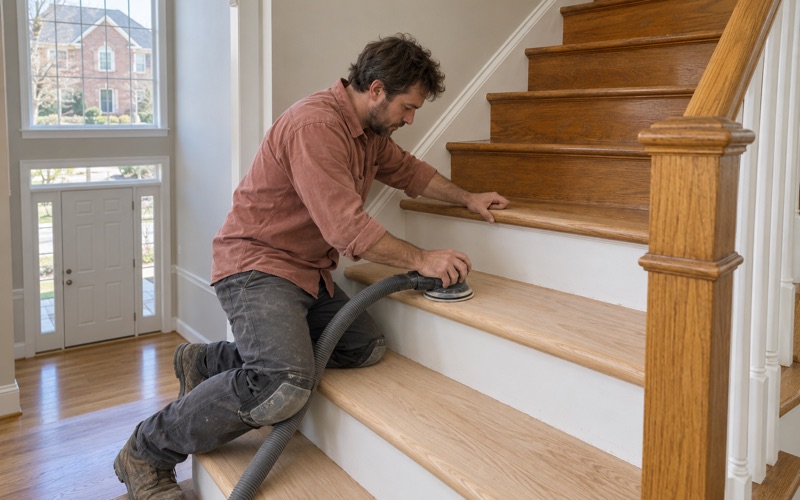
Most long-owned houses are occupied while we work, so we contain dust to the rooms being sanded, sealing doors and HVAC returns and cleaning with a HEPA vacuum as we go. We sequence rooms so the kitchen or a bedroom stays usable, and we tell you up front how long each area will be off limits. Stairs are quoted tread by tread, since a staircase with worn stair treads and nosing cannot be priced by the square foot.
A Little Local Context
Severna Park sits between the Severn and Magothy rivers, about 8 miles north of Annapolis and 17 miles south of Baltimore, and its 2020 census population was 39,933. It began as a stop on the Baltimore and Annapolis Railroad, originally named Boone, and the old line became the B&A Trail in 1990. Permits, licensing and code enforcement here run through Anne Arundel County rather than a town government, so the county’s Department of Inspections and Permits is the office to ask about any rules for your project.
When you are ready, we start with a walk-through, a look under the carpet or rug where it matters, and a written estimate that separates each room, the stairs and any repairs. You decide the order and the timing, and the floor gets done for the people who will keep living on it.
- 20+ Years Experience
- Written Itemized Estimates
- Dust-Contained Sanding