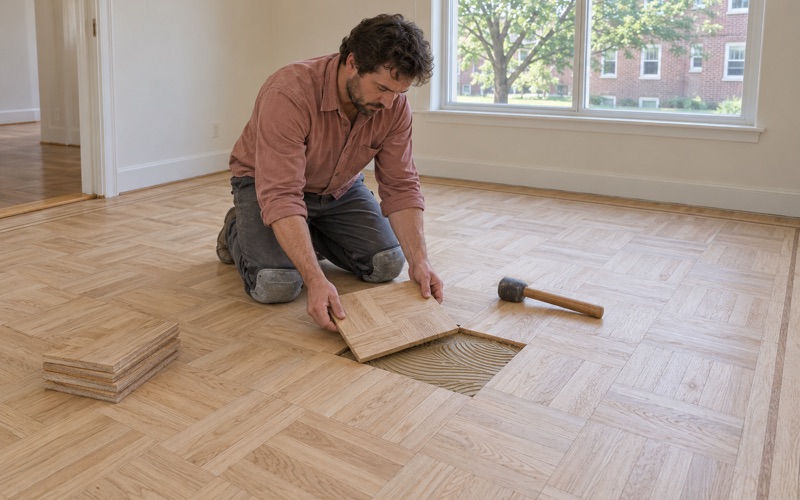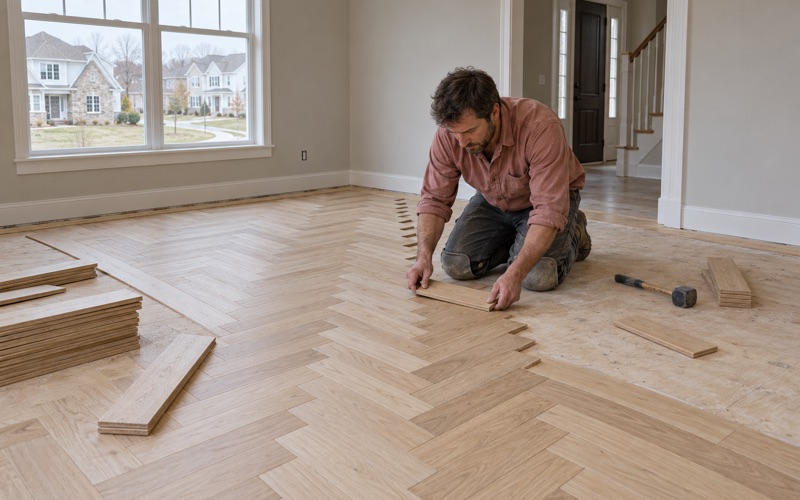
Severn Wood Flooring brings more than 20 years of wood-flooring in Union Square and across the Baltimore area to one question that matters on this block more than most: are you restoring the original floor, or covering it up? On a historic rowhouse, that choice decides whether the flooring work can count toward a rehabilitation credit at all. We plan the job so the floor that comes back is the floor that was there, repaired and refinished rather than replaced with something new.
That planning starts before any sanding. We note the build year, check painted thresholds and trim, look for old resilient tile or black mastic left under carpet, and walk every room so the estimate matches what is actually down. You get a written, itemized estimate that separates restoration from anything else in the job, which keeps the paperwork clean when a homeowner is weighing a larger rehab.
What we will not do is promise an outcome that belongs to someone else. Whether a project earns a credit is decided by the reviewing agencies, not by a flooring crew, and the approvals come first. The sections below walk through how the two programs treat floors and where restoration fits.
Two Historic Designations Over One Rowhouse Neighborhood
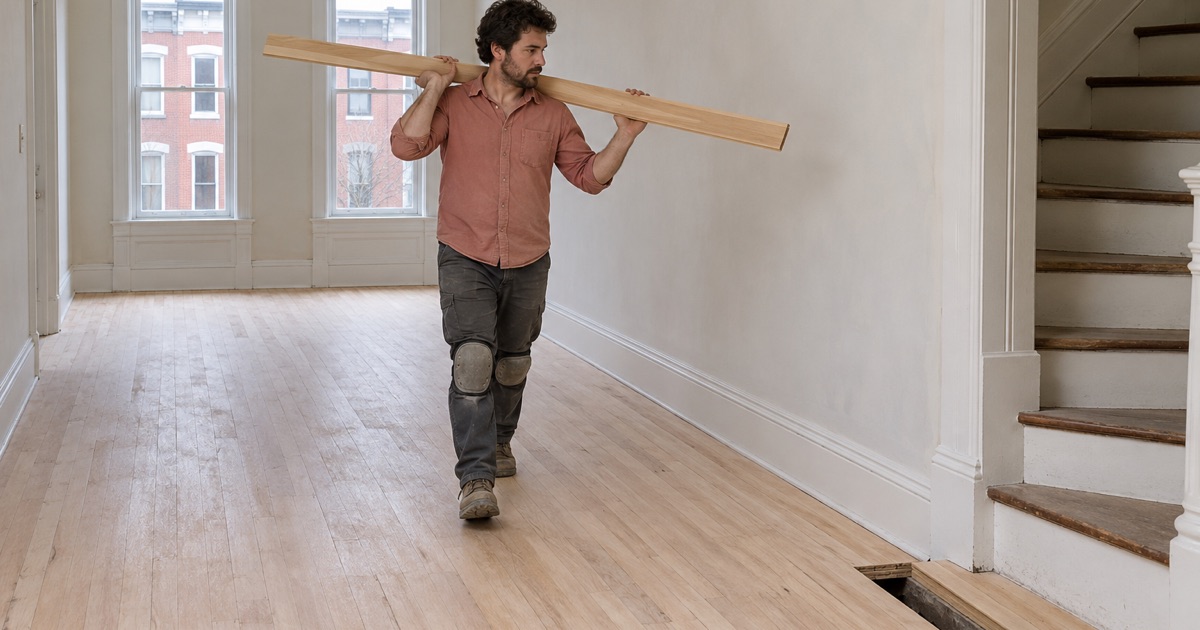
Union Square is a neighborhood in the Sowebo area of Baltimore, dating to the 1830s, with a historic district of houses and commerce buildings. Union Square Park dates from 1847 and covers 2.5 acres, and the neighborhood’s rowhouses are mostly pre- and post-Civil War Italianate, with many Early Victorian Greek Revival and Late Victorian Romanesque Revival examples mixed in. Houses of that age often still carry the floors they were built with, sometimes under later carpet, tile or several coats of finish.
A local district and a National Register district
The neighborhood sits inside the Union Square-Hollins Market Historic District, listed on the National Register of Historic Places in 1983, which is bounded by South Fulton Street, South Schroeder Street, West Baltimore Street and West Pratt Street. Baltimore City’s historic preservation commission, CHAP, also lists Union Square as a Baltimore City Historic District, a local designation. Both designations matter here, because the state and city credit programs each look to them.
What the housing stock looks like
Across the eight census tracts that BNIA groups as the Southwest Baltimore community statistical area, which takes in Union Square along with neighboring blocks, 5,340 of 8,736 housing units were built in 1939 or earlier. Across the same tracts, 6,562 units are single-family attached homes. Those are area-wide figures rather than a count for this neighborhood, but they describe the typical building we find here: an attached brick rowhouse with old wood floors on joists.
Why the floors are worth saving
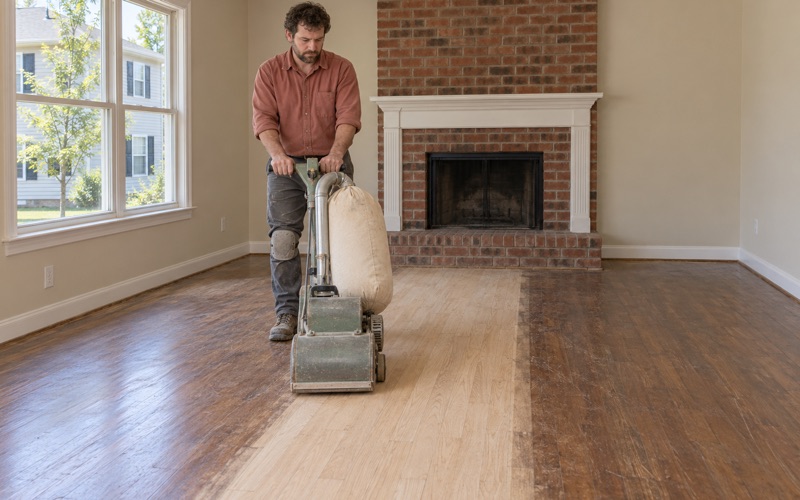
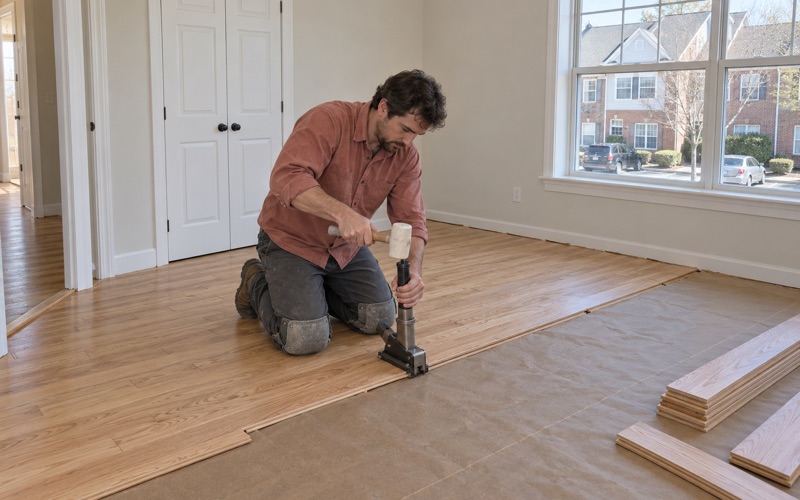
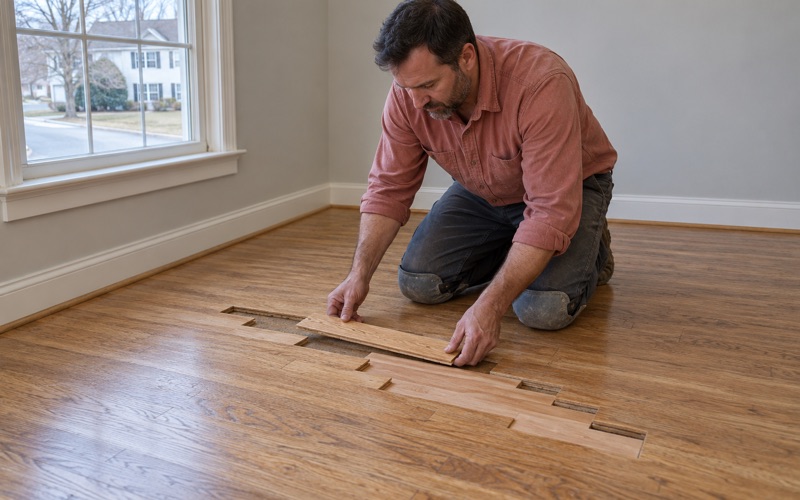
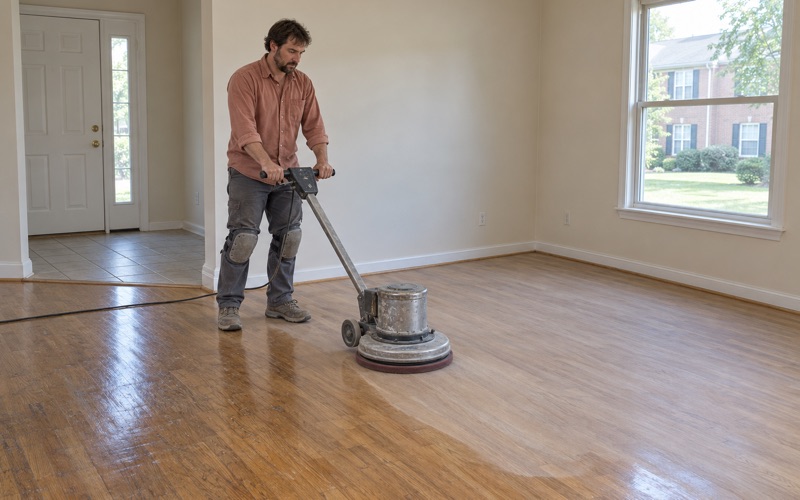
Old rowhouse floors tend to show the same problems: traffic lanes worn through the finish, board gapping, nail pops, water stains near radiators, and dark rug shadow outlines where furniture sat for decades. Much of that is surface wear, and a careful grit sequence on a drum sander and an orbital sander takes it back to clean wood. Where boards are split or missing, a weave-in repair with matching tongue and groove stock keeps the original floor in place instead of replacing it.
Species matters too. Rowhouses of this era can hold red oak strip flooring, white oak, maple or Douglas fir, and each sands and takes stain differently, so we identify the wood before choosing a grit sequence or a color. Older amber finishes and wax residue also need to come off cleanly, since new polyurethane will not bond to wax.
Looking for wood-flooring closer to Little Italy? See Wood-Flooring Services in Little Italy.
Maryland’s Homeowner Credit Names Flooring Restoration
The Maryland Historical Trust (MHT) runs a homeowner credit under its Historic Revitalization Tax Credit program. The credit equals 20 percent of eligible rehabilitation expenses, capped at $50,000 in a 24 month period, and a project must have at least $5,000 in eligible rehabilitation expenses. Eligible structures include a contributing resource in a National Register Historic District or a locally designated building, and applicants must own and occupy the property as a primary or secondary residence.
Flooring is on the eligible list
The Trust’s list of eligible work includes “interior finish restoration, including plaster, flooring, or trim.” That is the line that makes original floors part of the conversation in a rowhouse rehab. Tool and equipment rental is also listed as eligible, while tool and equipment purchases are not, which is one reason an itemized estimate that separates labor, materials and rentals is useful to have on file.
Restore, don’t cover
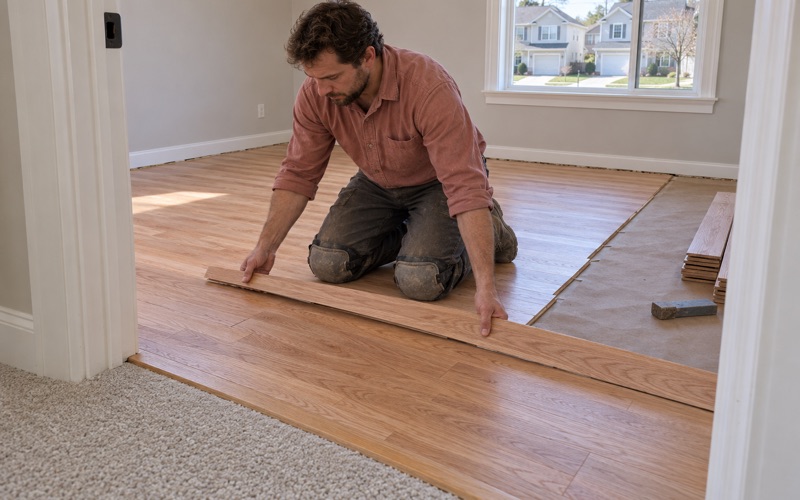
The same list names what does not count, and one item speaks directly to floors: “carpeting over historic flooring” is ineligible. So are curtains, blinds, rugs and other interior décor, and work that is primarily remodeling in nature. In practical terms, pulling up carpet, removing the tack strip and carpet pad, and restoring the wood beneath is the kind of finish restoration the program describes, while laying new carpet over that same floor is the kind it excludes.
Pulled carpet often leaves its own marks on old wood, including tack strip holes along the walls, staple lines and the occasional pet urine stains that soaked through the pad. Small fastener holes fill and sand out, while deeper stains may call for board replacement with matching stock. Where a corner can be lifted, we look at the wood under the carpet before the scope is written, so the estimate reflects what is there.
The standard the work is measured against
Work under the credit must comply with the Secretary of the Interior’s Standards for Rehabilitation. For a floor, that generally points toward repairing original boards, matching species and width when a board has to be replaced, and choosing a finish that suits the house. A change made for design preference rather than to restore a worn-out finish may not qualify, and whether a specific project does is a decision for the Trust, not for us.
Baltimore City’s 10-Year Credit and the 25 Percent Threshold
Baltimore City offers its own program, the Historic Restoration and Rehabilitation Tax Credit under City Code Article 28, Section 10-8. It is a 10-year credit against the City real property tax attributable to eligible improvements of historic properties. CHAP describes it as a credit granted on the increased property value that results from the qualifying work, and notes that it benefits both homeowners and businesses.
A threshold measured against the whole project
The city credit applies to significant improvements, defined as improvements, restoration or rehabilitation whose total documented construction cost equals or exceeds 25 percent of a property’s full cash value before work begins. Whether floor work alone reaches that line depends on the property’s full cash value and the size of the job. In a larger rehabilitation, restored floors become one documented piece alongside other interior and exterior work.
Interior work counts toward the whole
CHAP’s description of the program covers all renovations, interior and exterior. That means restored floors can sit inside the same project as plaster, trim, windows or masonry, with the documented cost of each piece part of the total. Our part is to give you a clear, itemized record of what the floor work involved and what it cost.
Because the city credit runs for 10 years on the increased property value from the work, the paperwork matters long after the floor is finished. An estimate and an invoice that list rooms, square footage, repairs and finish coats give a homeowner something concrete to keep with the rest of the project file. We write ours that way on every job, credit or not.
Getting Approval In Before the First Board Is Sanded
Both programs share one hard rule, and it is the one most likely to trip up a homeowner who calls a flooring crew first. The Maryland Historical Trust states that any work begun prior to its review and approval will not qualify for the tax credit. Baltimore City’s code says the city credit applies only to improvements that, before they are begun, have been preliminarily approved by CHAP as meeting local historic preservation standards.
The order of operations
For the state credit, the Trust’s application comes in Parts 1, 2 and 3, and the planned work must be reviewed and approved before it begins. For the city credit, CHAP asks that the application go in before work starts, through the city’s property tax credit portal. Only after those approvals are in hand should a sander touch the floor, because a refinished floor cannot be un-refinished for a reviewer.
Timelines vary with each program’s queue, so we treat the approval date as the fixed point and schedule the work after it. Furniture moves, drying time between coats and any board replacement get planned once that date is known, not before.
How we fit into the schedule
We can walk the house, document the existing floors with photos and notes, and write the itemized estimate a homeowner may want for an application, then hold the start date until the approvals come back. We do not prepare or submit applications, and we cannot say whether a project will be approved. When the go-ahead arrives, we contain dust to the rooms being worked on, seal doors and returns, and choose finishes that fit Maryland’s VOC limits for wood coatings.
Questions to settle before work starts
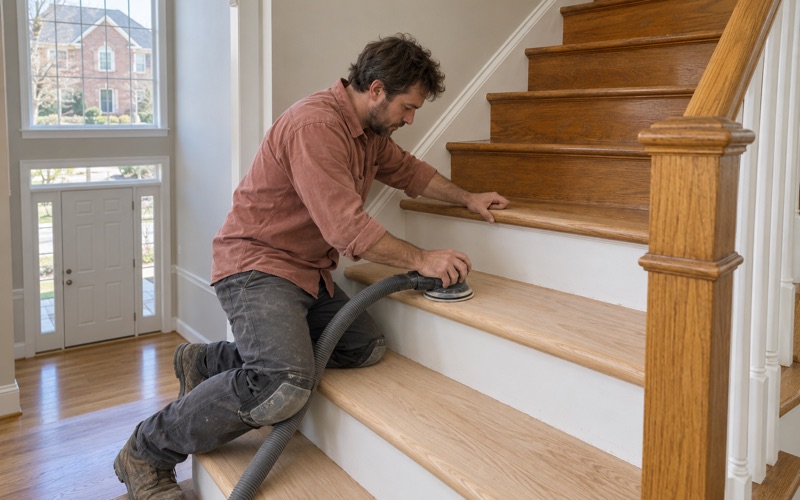
Before the first pass, it helps to know which rooms are original floor and which were replaced, whether any old resilient tile or black mastic needs another trade, and whether a stair or a patch where a wall came out needs a weave-in repair. Settling those questions early keeps the approved scope matched to the work actually done, which matters when a reviewer compares the two.
Finish choice belongs in the same conversation. A waterborne polyurethane dries faster and stays clearer, an oil-modified polyurethane ambers toward the warm tone many older floors already carry, and a hardwax oil gives a low sheen level that is easy to spot-repair. We lay samples of each option you are weighing so the decision is made on your own boards, not a brochure.
- 20+ Years Experience
- Written Itemized Estimates
- Dust-Contained Sanding