
Severn Wood Flooring brings 20+ years of wood floor refinishing to Severn, MD, serving surrounding cities including Jessup, Elkridge, Odenton, Glen Burnie and Linthicum. We sand worn hardwood back to bare wood, or lightly abrade and recoat it when the wood itself is still sound, and finish it in a color you have already seen on your own boards. Every quote is a written, itemized estimate you can keep for your records.
The refinishing work we do most often is on red oak strip flooring and prefinished plank in houses and townhouses built over the last few decades, along with older oak in pre-1980 neighborhoods and some maple and white oak. Each of those species sands, stains and ages differently. We look at the wood, the finish and the room before deciding on the method, rather than treating every floor as the same three-coat job.
Before any machine runs, we confirm the build year and look for painted trim, because houses built before 1978 fall under lead-safe renovation rules. We also test for wax and check how much wood remains above the tongue. Those three checks decide what refinishing your floor can safely take.
Signs A Hardwood Floor Is Ready For Refinishing
Gray Traffic Lanes And Worn-Through Finish
The first sign is usually a dull, gray path from the front door to the kitchen, where the finish has worn through and the bare wood has started to take on dirt and moisture. Once the wood fibers in those traffic lanes have grayed, a fresh coat of finish will seal the discoloration in rather than remove it.
Catching a floor while the wear is still only in the finish is the cheaper path, because a screen and recoat can restore it without sanding. Once the lanes have turned gray, a full sanding is the only way back to clean wood.
Pet Urine Stains, Water Stains And Rug Shadow
Water stains from plant pots, pet urine stains near doors and the rug shadow left where a rug blocked sunlight for years all change the color of the wood itself. Light marks often sand out evenly with the rest of the floor. Deep black stains do not, and we plan board replacement for those before the sanding starts.
Rug shadow is the easiest to fix. Once the old finish is gone and the floor is evenly sanded, the lighter and darker areas blend, and the new finish ages at the same rate across the room.
Orange Oak And Ambered Finishes
Red oak under an oil-modified polyurethane gradually ambers, which is why many floors from the 1990s and 2000s now read as orange oak. Sanding off the old finish removes most of that color. From there, a stain or a clearer waterborne polyurethane changes the tone, and samples on your own boards show how far it will move.
Full Sanding Or A Screen And Recoat
When A Screen And Recoat Is Enough
A screen and recoat buffs the existing finish with an abrasive screen and adds one or two new coats, without touching the wood underneath. It suits floors with surface scuffs and dulling where the finish is still intact, and it creates far less dust and downtime than a full sanding. It will not fix scratches into the wood, gray lanes or stains.
It also will not bond over wax or some older finishes, so we test the floor before recommending it. A recoat that peels within a month costs more than the full sanding it was meant to avoid.
When Only Bare Wood Will Do
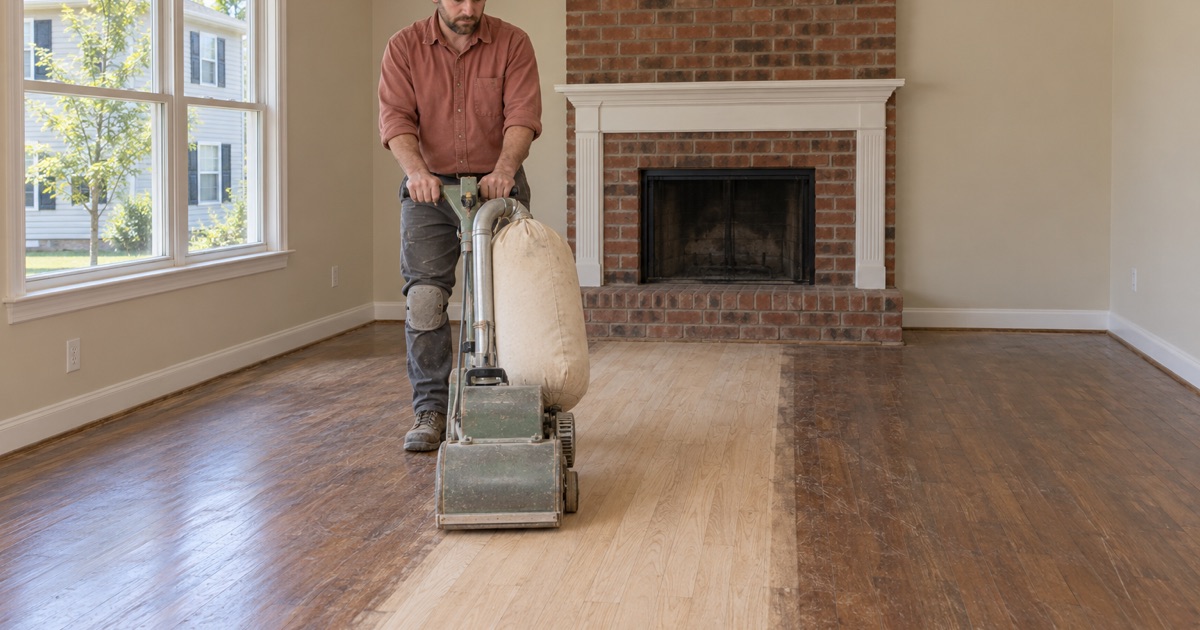
Deep scratches, gray traffic lanes, stains, a color change and peeling polyurethane all need a full sanding to bare wood. We use a drum sander on the field of the floor and an orbital sander and edger along the walls, working through a grit sequence so each pass removes the marks left by the one before.
Skipping grits leaves visible swirl and chatter marks that show up the moment stain goes on. Our crew works the whole sequence on every room, even when the schedule is tight.
How Much Wood Is Left To Sand
Solid hardwood has only so much wood above the tongue, and every sanding uses some of it. Engineered flooring is thinner still, with a wear layer that may take one sanding or none. We pull a register or check a threshold to measure what remains, then adjust the grit sequence or recommend a recoat when the margin is small.
Stain, Finish And Sheen Choices
Stain Samples On Your Own Floor
Stain colors look different on red oak, white oak and maple, and different again in a north-facing room. After the final sanding pass, we lay several sample patches on your floor and leave them for you to see in daylight and lamplight. You choose from what your own boards actually do with the color.
Maple and some other tight-grained woods can blotch with darker stains, so we may recommend a natural finish or a conditioner there. We tell you before the stain goes on, not after.
Waterborne, Oil-Modified Or Hardwax Oil
Waterborne polyurethane dries clear, has a lighter odor and allows foot traffic sooner. Oil-modified polyurethane adds a warm amber tone and takes longer to cure. Hardwax oil gives a matte, natural look and can be spot repaired, but needs more upkeep. Every product we apply meets the Maryland wood coating limits in COMAR 26.11.39.
Choosing A Sheen Level
Matte and satin sheens hide scratches and dust better and suit most homes with children and pets, while semi-gloss and gloss show every mark but read as more formal. The sheen level changes the look of a stain as much as the color itself, so we sample it along with the stain.
Our Step-by-Step Wood Floor Refinishing Process
Step 1: Inspect, Test And Measure
We confirm the build year, check painted surfaces for lead risk, test for wax and measure the remaining wood. We also look for loose boards, squeaks and face nails that need setting before sanding. The written estimate lists what we found and what each part of the work costs.
Step 2: Seal The Rooms
Doorways are sealed, return vents in the work area are covered, and furniture is moved out. Sanding dust is collected at the machine and cleaned up with a HEPA vacuum, so the rest of the house stays livable while the work goes on.
Step 3: Sand And Repair
The floor is sanded through the full grit sequence, with damaged boards replaced and gaps filled along the way. Between passes we vacuum and inspect under raking light to catch marks before the stain does.
Step 4: Stain And Finish Coats
Once you approve a sample, we apply stain if you want color, then two or more coats of finish with drying time between them. Each coat is lightly abraded so the next bonds properly.
Step 5: Cure And Return The Room
We give you a written schedule for when the floor can take socks, shoes, furniture and rugs. Felt pads on furniture legs and waiting the full cure before laying rugs keep a new finish from marking in its first weeks.
- 20+ Years Experience
- Written Itemized Estimates
- Dust-Contained Sanding